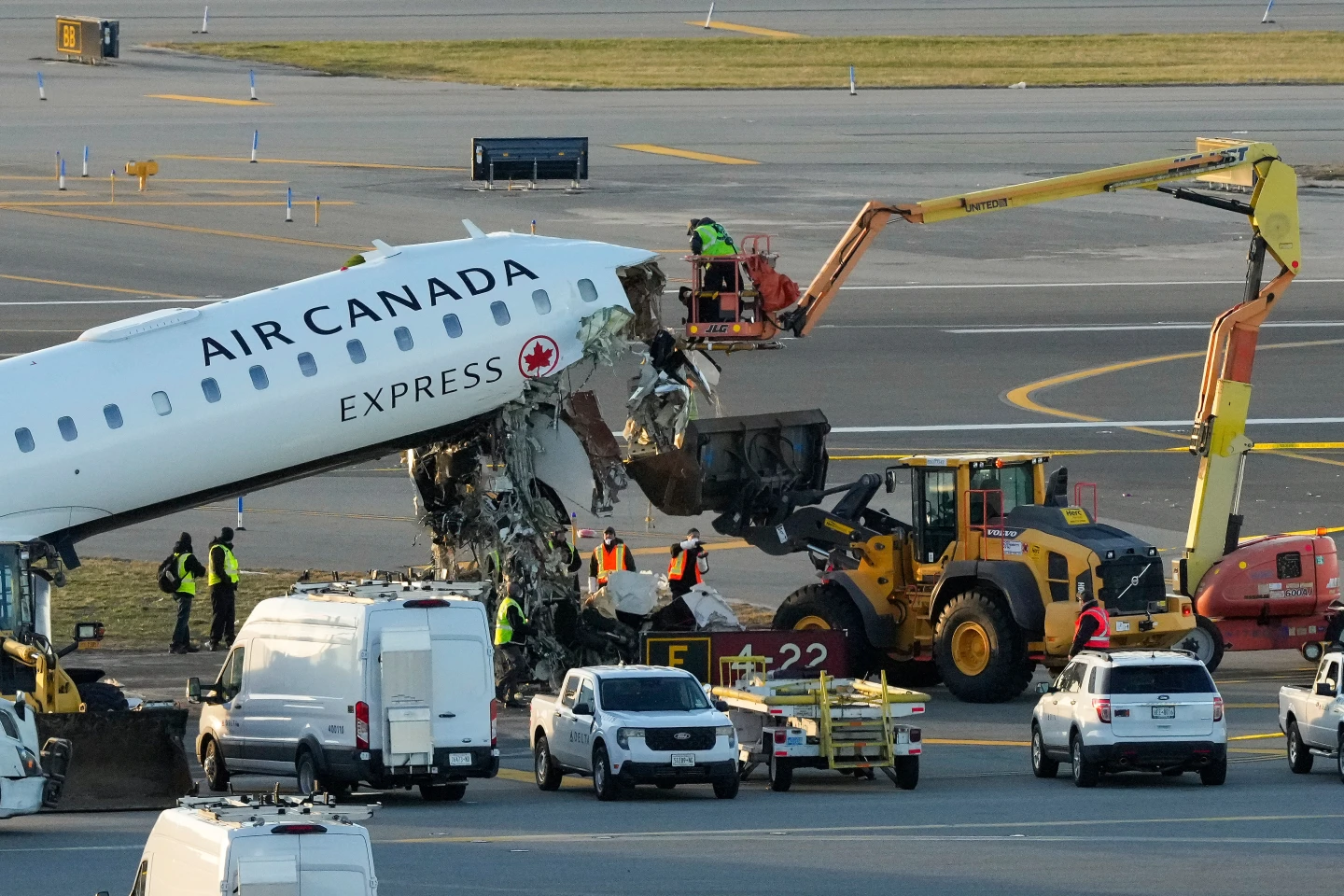
The systems in place at New York's LaGuardia Airport, designed to prevent ground collisions, failed to prevent an Air Canada jet from smashing into a fire truck that had just entered the runway as the plane was landing.
The National Transportation Safety Board (NTSB) is examining what went wrong in the lead-up to the crash, which resulted in the deaths of both pilots and injuries to dozens of others. Just 12 seconds before the plane with 76 passengers made its landing, one of the two air traffic controllers on duty had cleared the truck to cross the runway. The frantic calls for the truck to stop did not prevent the collision.
Investigators are interviewing those involved, assessing wreckage, and testing various elements that could have contributed to the tragedy. The damaged aircraft has been moved to a secure hangar for further examination.
Understanding the Airport Surface Detection Systems
LaGuardia is equipped with an Airport Surface Detection System (ASDE-X), which incorporates radar data, transponder information from planes and ground vehicles, and other data to track the locations of all aircraft and vehicles. Systems like ASDE-X have previously been credited with avoiding several potential collisions. However, in this case, the system failed to alert controllers prior to the incident due to its inability to predict the accidental collision.
NTSB Chairwoman Jennifer Homendy stated that the fire truck, lacking a transponder for precise tracking, contributed to the system's limitations. An increased number of emergency vehicles on the airfield may have complicated the detection of the fire truck's movements, as the ASDE system functions better with moving objects than stationary ones.
Contributing Factors to Runway Incursions
Despite the controller's authorization for the fire truck to cross, embedded runway lights that should have flashed red to warn drivers of the aircraft's landing were likely overlooked. Distractions from the emergency response communications could have played a role in both the controller's and the driver's oversight. These systems, including the runway status lights, are not foolproof but are part of an overarching safety system for reducing risks.
This incident highlights the need for improved communication protocols and updated equipment within airport emergency vehicles to enhance aviation safety and prevent future tragedies. The NTSB's ongoing investigation aims to provide clarity and solutions to prevent such avoidable accidents in the future.