For the last fortnight, as drones and missiles have whistled through the skies above Iran and the Gulf, air traffic controllers have been shepherding passenger jets through safer but congested airspace on the edge of the war.
A glance at a flight tracker map shows how busy Egypt and Georgia have become.
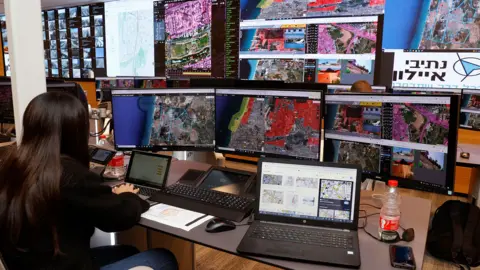
Working side-by-side, each controller looks after a different section of the map, coordinating with colleagues which planes are entering and leaving their airspace.
On a normal day, an individual controller might manage six aircraft in their area at a time. But when there's a war on, it could be double that.
The brain can only give that amount of concentration at that level of intensity for 20-30 minutes, says retired air traffic controller, Brian Roche, who spent 18 years in the job.
During busy periods, more controllers are brought in to manage the greater volume of aircraft in particular areas and controllers are rotated more frequently to ensure they don't become overwhelmed.
When airspace is suddenly shut or congested, controllers communicate with pilots about where they need to go, how much fuel they have, and which airports can accommodate their type of aircraft.
Controllers must ensure all planes are safely separated both vertically and horizontally because large passenger jets cause greater turbulence and instability for surrounding aircraft.
In the face of potential crises, pilots work actively to avoid dangerous airspace, with careful planning grounded in situational awareness of geopolitical tensions. The undercurrents of danger are palpable, as air traffic controllers manage not just a complex web of routes but the safety and security of every passenger in the sky.
Reflecting on the changing norms of flying in wartime, cabin crew share their perspective, emphasizing the importance of their role in managing passenger concerns and conveying a sense of security while navigating treacherous airspace.
As the landscape of air travel continues to adapt, the dedication of air traffic controllers remains unwavering, showcasing their critical role in maintaining air travel safety against a backdrop of conflict.