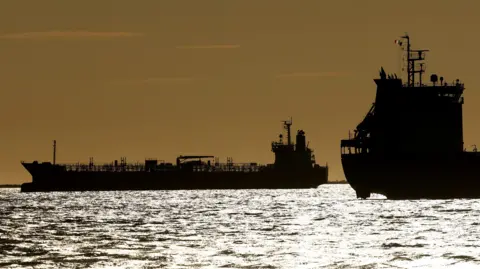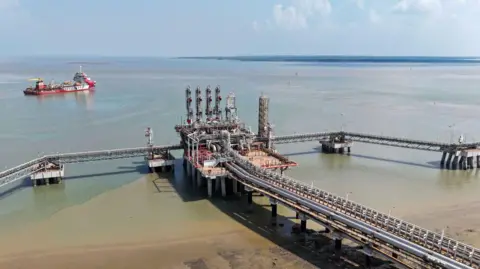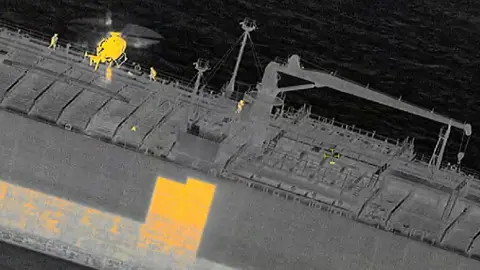
Just under 100 ships have passed through the Strait of Hormuz since the start of March, according to data analysed by BBC Verify, despite periodic attacks on shipping in the area by Iranian forces.
While some energy and everyday goods are still moving through one of the world's busiest shipping lanes, daily traffic is down about 95% since the Iran war began on 28 February.
Before the war, about 138 ships passed through the strait each day according to the Joint Maritime Information Centre, carrying one fifth of the global oil supply.
The data provided by shipping analysts Kpler shows 99 vessels passing the narrow strait so far this month, an average of just 5-6 vessels a day.
Our analysis indicates that about a third of these recent crossings were made by ships with connections to Iran, including 14 vessels sailing under Iran's flag and others under sanctions due to suspected links to Tehran's oil trade.
Shipping data suggests that some vessels are choosing longer routes to avoid detection and risks; for example, tracking data for a Pakistan-flagged oil tanker indicated a passage closer to the Iranian coast.
Four threats to shipping
Since the conflict began, 20 commercial vessels have been attacked off the Iranian coast. One significant incident involved the Thai-flagged bulk carrier, Mayuree Naree, which was struck by projectiles while attempting to pass through.
Iran's strategy appears to include the use of mines and various attack methods, complicating navigation through the strait. Notably, as vessels reroute to hug the coast, they may be forced into Iranian territorial waters.
Moreover, many ships are believed to have switched off their tracking systems to evade detection, creating challenges for maritime analysts trying to monitor movements through the area.