In brief
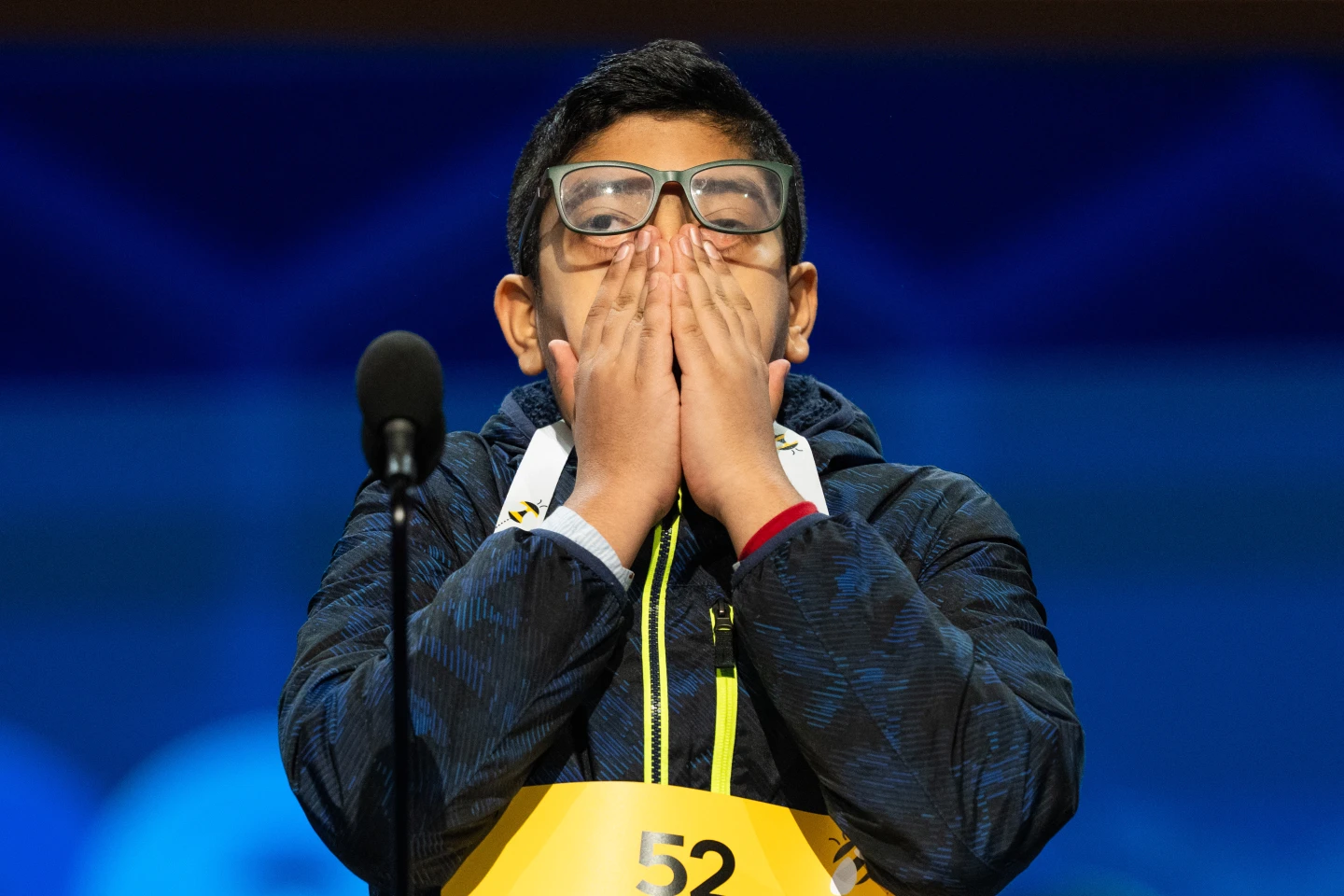
Shrey Parikh – a 14‑year‑old star from Rancho Cucamonga – carries the weight of four coaches, paid‑up study packs, and a competitive online schedule to secure the highest place in the 2024 Scripps National Spelling Bee. On the other side of the spectrum sits Sarv Dharavane, 12‑year‑old from Dunwoody, who champions a ‘dictionary‑only’ method, basing every spelling battle on Merriam‑Webster’s Unabridged. The debate between rote memorization and mastery of language roots, highlighted by champion Dev Shah’s 2023 victory, finds a new focus: balance. While Shrey blazed ahead after a misstep at his school bee, Sarv’s steady, self‑guided learning demonstrates that a single source – the dictionary – can produce a semifinalist. Together these stories illustrate the fresh approaches now sweeping U.S. schools and online arenas, with coaching, AI platforms and long‑term dictionary immersion as emerging pillars of success.
Shrey Parikh’s All‑In Approach to Spelling
Washington (AP) — Shrey Parikh finished third in the 2024 Scripps National Spelling Bee before making a stunning exit from his school bee last year. Now, in his final year before he ages out of the competition, he’s fully committed.
The 14‑year‑old from Rancho Cucamonga, California, works with three coaches. He pays for word lists and study guides, and he spends hours learning every Greek and Latin root, every language pattern, and every spelling‑bee‑worthy word he can find. He competes all year long in online bees that pit him against the country’s top spellers.
Shrey’s systematic approach broke through for his school calculation: he made it to the 54‑kid semifinals and is chasing a spot in the finals. At least one competitor, however, is going old‑school, eschewing outside help and preparing solely with a dictionary. The split strategy has revived a long‑running, but good‑natured debate in spelling circles: is it the mastery of language or rote memorization that matters most?
Every Word is in the Dictionary, If You Can Find It
For the highest levels of competition, knowing the roots and languages of origin is almost required. Yet some champions shine for their incredible recall: instant visualization of any word, or reciting dictionary definitions verbatim. Alumni such as Nihar Janga (2016), Zaila Avant‑Garde (2021), and Bruhat Soma (2024) have set a precedent. Sarv Dharavane is poised to follow.
Sarv finished third in 2025 as a relative unknown. The 12‑year‑old sixth‑grader from Dunwoody, Georgia, relies on no coach and none of the usual online bees; his entire study guide is Merriam‑Webster’s Unabridged dictionary. He calls the book his coach.
“I didn’t do anything different last year because the same strategy got me far,” Sarv said. “By zoning into the dictionary, whether I’m scanning for hard‑to‑remember words or going through long lists without fatigue, my memory stays fresh.” His method underscores the power of deep, guided study.
Master the Roots, and You Don’t Need to Memorize as Much
Champion Dev Shah of 2023 advocates a more artistic approach. Shah’s coach, Scott Remer, turned out to be another advocate of mastering language patterns and spotting exceptions. “The skill of guessing is everything,” Shah wrote in a Washington Post op‑ed.
When a word slips the mind, Shah says, a picture of its Greek or Latin root can reset the brain. He admits memorizing every one is impossible, but a strategic mix can keep him ahead. Former champion Sohum Sukhatankar, who now coaches Shrey, recommends focusing mental capacity on the most useful information, “so little memorization is required.”
After a Catastrophic School Bee, One Speller Seeks Every Edge
Shrey was impacted by a rough experience at his school bee: a fever, a missed “calipers” word, and a subsequent narrative of “devastation.” That shook his motivation and drove him to harness AI‑assisted tools like Onyma, a platform launched this month by Sukhatankar and Sam Evans. He also uses SpellPundit, a resource that was a staple of the 2019 champion’s preparation.
Shrey sounds cautious about the added pressure of guessing, but evangelizes intensive, efficient study. “Let’s learn every possible word,” Evans says, acknowledging, “the dictionary is the most basic thing that spellers need to know.”
Ben Nuckols has covered the Scripps National Spelling Bee since 2012. Follow his work here.