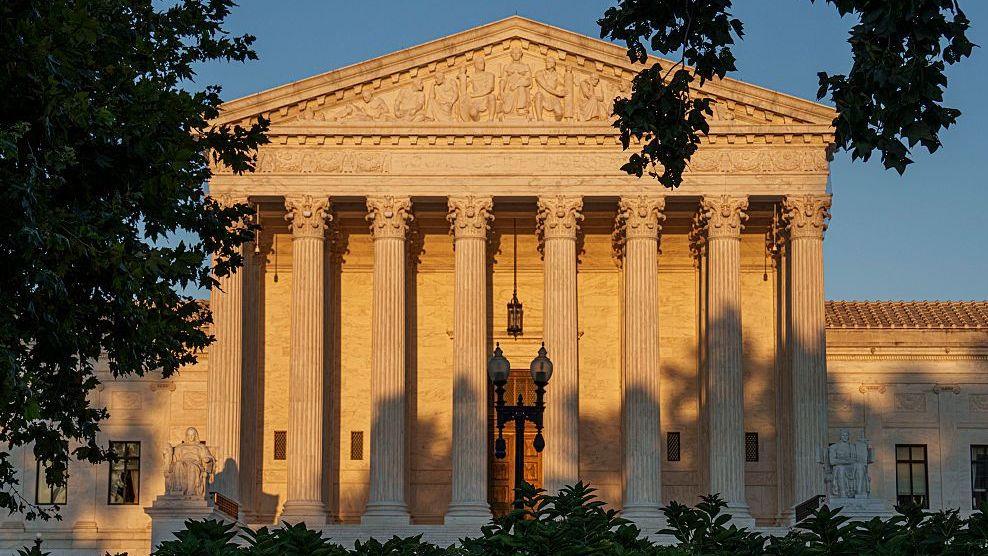
The US Supreme Court has lifted restrictions on the Trump administration’s use of a controversial federal database that aggregates citizenship data to flag voters suspected of being non‑citizens.
Critics warn that the system’s reliability is questionable and that it could wrongly purge American citizens from voter rolls.
In June, a federal judge found the revamped system unlawful, citing violations of privacy rights, but the top court overruled that order, noting that the National Voter Registration Act limits large‑scale purges before elections.
Unlike a blanket purge, states can still conduct individual citizenship checks, but the Supreme Court’s ruling means the Department of Homeland Security’s Systematic Alien Verification for Entitlements (SAVE) program can be used again in bulk.
The three dissenting justices, including Justice Ketanji Brown Jackson, cautioned that “the harm caused by burdening even a few lawful voters outweighs the non‑existent harm that the government experiences.”
Save was created in 1986 to verify eligibility for public benefits, and expanded last year to allow bulk searches using Social Security data.
Voting‑rights groups, such as the League of Women Voters, say “‘it puts millions of Americans at risk of being unlawfully targeted by the administration’s unreliable voter purge database weeks before the mid‑term elections.’”
In Texas, an audit of the program found that 10% or more of nearly 100 identified non‑citizens were actually U.S. citizens, while fewer than 20 have been charged with illegal voting.
Some states, like Georgia, have worked with the program, vetting flagged voters and even interviewing them to preserve voting rights.
With mid‑term elections just around the corner, the decision has drawn sharp criticism from civil‑rights advocates who fear it could facilitate widespread voter suppression.