At least five people have been killed in Russian strikes across Ukraine, after a massive overnight aerial bombardment targeted several regions across the country.
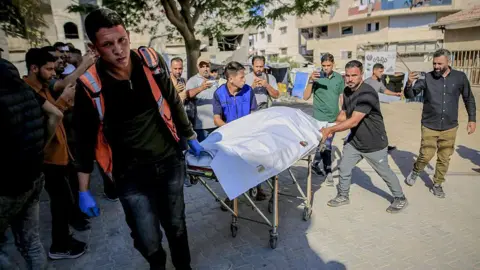
A 61-year-old woman was killed when a drone hit an electric train in Kharkiv early on Tuesday, authorities said, while other deaths were reported in Zaporizhzhia, Kherson, and Poltava.
Officials stated that the attacks were among the worst seen in the last ten days, and came shortly after Ukrainian President Volodymyr Zelensky had warned of an imminent 'massive strike' in his nightly address.
Russian strikes also disrupted Moldova's energy infrastructure, disconnecting its key power connection with Europe—a situation described as 'fragile' by President Maia Sandu.
Sirens sounded across Ukraine as Russia launched a barrage of missiles and drones, employing seven ballistic missiles, 23 cruise missiles, four air-launched guided missiles, and 392 drones in the attack. Ukrainian air defense units managed to intercept 25 missiles and 365 drones.
In a post on social media, Zelensky called for increased defensive aid, emphasizing that the scale of the attacks indicates the urgent need for enhanced protection to safeguard civilian lives. 'More support is crucial for Ukraine,' he declared.
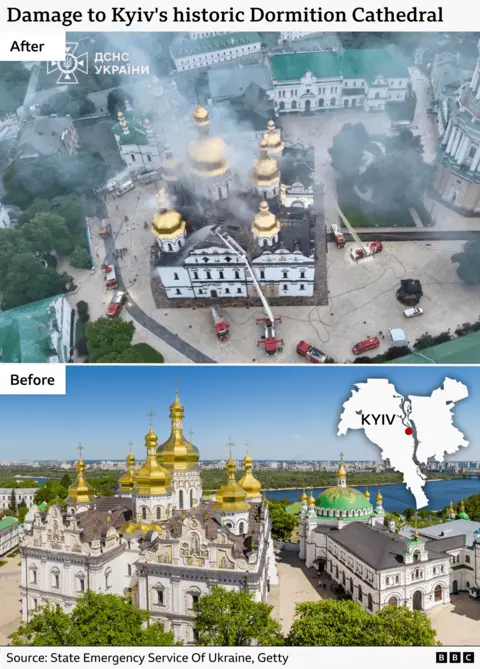
While fears of new strikes had been rising prior to the attacks, the focus was notably on regions outside of the capital, Kyiv, with significant damage reported in eleven regions. Notably, Zaporizhzhia was severely affected, suffering hits from six drones followed by six ballistic missiles, with a tragic outcome of one death and nine injuries.
Local resident Dymtro Zaiets recounted the harrowing experience of fleeing with his family amidst flames and destruction, underscoring the human impact of the violence.
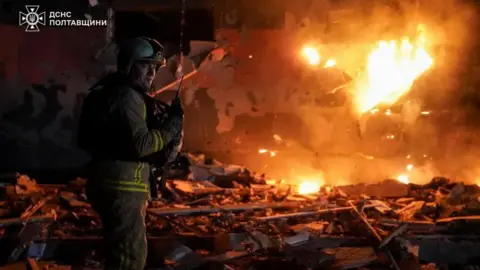
Elsewhere, Poltava experienced fatalities and injuries due to strikes on residential buildings and a hotel, while other regions also reported civilian casualties.
The ongoing assaults come as Moldova's government condemned the attack on its energy infrastructure, highlighting broader implications for regional security. Overall, the situation remains precarious amidst ongoing military hostilities, with discussions among Ukrainian and international officials addressing the need for urgent support and a resolution to the conflict.
A 61-year-old woman was killed when a drone hit an electric train in Kharkiv early on Tuesday, authorities said, while other deaths were reported in Zaporizhzhia, Kherson, and Poltava.
Officials stated that the attacks were among the worst seen in the last ten days, and came shortly after Ukrainian President Volodymyr Zelensky had warned of an imminent 'massive strike' in his nightly address.
Russian strikes also disrupted Moldova's energy infrastructure, disconnecting its key power connection with Europe—a situation described as 'fragile' by President Maia Sandu.
Sirens sounded across Ukraine as Russia launched a barrage of missiles and drones, employing seven ballistic missiles, 23 cruise missiles, four air-launched guided missiles, and 392 drones in the attack. Ukrainian air defense units managed to intercept 25 missiles and 365 drones.
In a post on social media, Zelensky called for increased defensive aid, emphasizing that the scale of the attacks indicates the urgent need for enhanced protection to safeguard civilian lives. 'More support is crucial for Ukraine,' he declared.
While fears of new strikes had been rising prior to the attacks, the focus was notably on regions outside of the capital, Kyiv, with significant damage reported in eleven regions. Notably, Zaporizhzhia was severely affected, suffering hits from six drones followed by six ballistic missiles, with a tragic outcome of one death and nine injuries.
Local resident Dymtro Zaiets recounted the harrowing experience of fleeing with his family amidst flames and destruction, underscoring the human impact of the violence.
Elsewhere, Poltava experienced fatalities and injuries due to strikes on residential buildings and a hotel, while other regions also reported civilian casualties.
The ongoing assaults come as Moldova's government condemned the attack on its energy infrastructure, highlighting broader implications for regional security. Overall, the situation remains precarious amidst ongoing military hostilities, with discussions among Ukrainian and international officials addressing the need for urgent support and a resolution to the conflict.