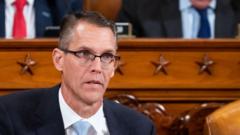
In the Iowa Republican primary, Randy Feenstra—who had been touted as a front‑runner and received a late endorsement from former President Donald Trump—conceded defeat after the vote concluded. The loss was short‑notice and came despite a high‑profile campaign that underscored the former president’s role in the campaign.
Feenstra, a three‑term congressman from the state, had long been seen as a reliable supporter of Trump. The winner, Zach Lahn, a farmer and businessman, ran on a platform that echoed the former president’s rhetoric, with slogans like "Make Iowa Healthy Again" and a promise to keep the state “first” and “Iowa‑first.” Lahn also benefitted from the backing of conservative groups such as Turning Point USA and grassroots activists who viewed Feenstra as too aligned with Washington.
The election underscores the limited reach of Trump’s endorsement in Iowa. A recent poll showed Trump’s approval rating in the state at a low of –20% and many voters were disenchanted by the trade tariffs that raised costs for farmers, as well as rising fuel and fertiliser prices linked to the U.S.‑Israel‑Iran conflict.
In the broader national picture, Trump’s influence was also being tested elsewhere. In Kentucky, Republican Tom Massie was unseated by a Trump‑backed challenger, and Texas Attorney General Ken Paxton secured the Democratic Senate nomination against the incumbent John Cornyn. In each case, however, the endorsement did not guarantee victory.
With the primary concluded, the Republican Party in Iowa faces the prospect of a march to the state’s heavily contested governorship. Republican nominee Zach Lahn will face Democrat Rob Sand, the state auditor, in November. In the Senate race, the seat left by long‑time Republican Joni Ernst will be contested between centrist Josh Turek—endorsed by national Democrats—and Republican candidate Ashley Hinson.
As the national spotlight remains on states like Texas, it may be in the cornfields of Iowa that Democrats find a competitive edge. The recent primary results signal that Iowa’s vote is no longer a foregone conclusion, and the state’s future political landscape remains in flux.