
In brief
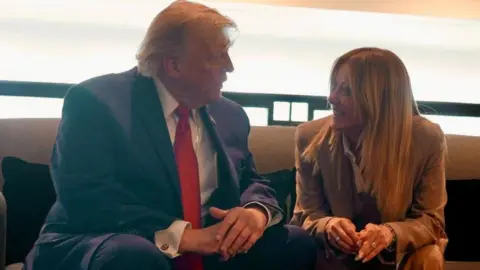
At the G7 summit in Evian, Italy’s Giorgia Meloni filmed a sharp response to former U.S. president Donald Trump’s claims that she asked repeatedly for a photo together and that her popularity was waning. Trump said Meloni’s political standing in Italy was low and that she failed to support U.S. efforts against Iran. Meloni blasted the attacks as senseless, saying the U.S. president’s focus should be on his own popularity, and reiterated that Italy and the United States remain allies. The dispute extends to issues such as the use of Italian bases for U.S. operations above Iran, and previous criticisms of Pope Leo XIV by Trump. The tension underscores a growing separation between the two countries as Turkey and America confront the geopolitical fallout from Trump’s 2023 raid on Iranian missile sites.
Italian Prime Minister Giorgia Meloni responded on Instagram to former U.S. President Donald Trump’s claims that her popularity in Italy was abysmal and that she begged him for a photo during a G7 meeting.
Trump has characterised Meloni as "doing poorly" in Italy, accused her of not backing U.S. positions on preventing Iran from developing nuclear weapons, and criticized her for blocking U.S. access to Italian air facilities.
Meloni dismissed the remarks as "senseless" and stated that her own popularity does not stem from any relationship with Trump. She urged the former president to focus on his own popularity instead.
She confirmed that the relationship between Italy and the United States remains unchanged, noting that there have been no recriminations since the remarks were made.
Earlier this year, Trump’s comments about Pope Leo XIV and his criticism of Italy’s use of military facilities for Iranian operations further strained relations. These tensions come amid a broader rift between the two nations following Trump’s 2023 operation against Iranian missiles.
Italian Foreign Minister Antonio Tajani will cancel a trip to the United States next week in the wake of the growing diplomatic fallout.
The clash between the two leaders, who shared an alignment at Trump’s inauguration in January 2025, illustrates a widening gap over foreign policy positions and internal politics of the two countries.

