In brief
In a surprising move, the U.S. State Department has ordered certain public libraries to stop processing passport applications, affecting an estimated 1,400 libraries nationwide. This regulatory change has raised concerns among community leaders, residents, and lawmakers, who argue that libraries are vital for access to passport services, especially for working families and rural residents. Lawmakers are urging the Secretary of State to find a solution to retain these services.
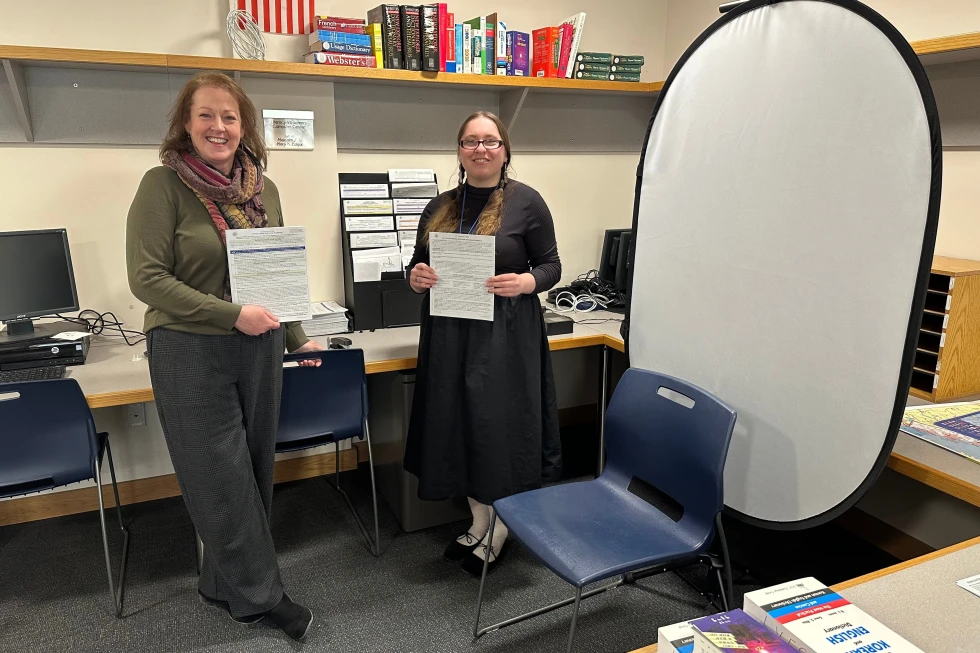
NORWICH, Conn. (AP) — The U.S. State Department has ordered certain public libraries nationwide to cease processing passport applications, disrupting a long-standing service that librarians say their communities have come to rely on and that has run smoothly for years.The agency, which regulates U.S. passports, began issuing cease and desist orders to not-for-profit libraries in late fall, informing them they were no longer authorized to participate in the Passport Acceptance Facility program as of Friday. “We still get calls daily seeking that service,” said Cathleen Special, executive director of the Otis Library in Norwich, Connecticut, where passport services were offered for 18 years but ceased in November after receiving the letter. “Our community was so used to us offering this.”A State Department spokesperson said the order was given because federal law and regulations “clearly prohibit non-governmental organizations” from collecting and retaining fees for a passport application. Government-run libraries are not impacted.The spokesperson did not respond to questions as to why it has become an issue now and exactly how many libraries are impacted by the cease and desist order. In a statement, they said, “passport services has over 7,500 acceptance facilities nationwide and the number of libraries found ineligible makes up less than one percent of our total network.”The American Library Association estimates about 1,400 mostly non-profit public libraries nationwide could potentially be affected, or about 15% of all public libraries, depending on how many offer passport services.Democratic and Republican members of Congress from Connecticut, Pennsylvania, New York, New Jersey and Maryland are pushing back, sending a letter to Secretary of State Marco Rubio this month asking him to extend the existing program until Congress finds a permanent solution.“In a time when demand for passports is surging, libraries are among the most accessible passport acceptance facilities, particularly for working families and rural residents,” the members wrote.The lawmakers’ letter said people will have to travel long distances, take unpaid time off from work or forgo getting a passport when demand is surging due to Real ID requirements. If Republicans in Congress impose strict new voting rules, citizens could need their passport or birth certificate to register. They said the change is particularly disruptive to their states, where many public libraries are structured as nonprofit entities. They predicted some libraries, which benefit financially from passport processing fees, will have to lay off staff, cut programs or close their doors if not allowed to continue providing passport services.Pennsylvania Reps. Madeleine Dean, a Democrat, and John Joyce, a Republican, have proposed bipartisan legislation that would allow 501(c)(3) non-profit public libraries to continue to serve as passport acceptance facilities by amending the Passport Act of 1920. Dean, who first learned about the policy change from a library in her district that has provided passport services for 20 years, called the State Department’s interpretation of the law 'nonsense.' Special added that the Norwich post office had often referred people to her library for passports when someone needed service outside regular hours. Library staff also assisted applicants with language barriers. “And now the burden falls on them to do all of it and that’s tough on them,” she said of the post office down the street. “I don’t know how they’re keeping up, to be honest, because it was such a popular service with us.”