In brief
Ukraine's air defense system has evolved significantly since the onset of the war, incorporating advanced technologies and local innovations such as the Sky Map software and the P1-SUN interceptor drones. Despite achieving high interception rates against Russian attacks, the human cost remains tragic due to persistent aerial threats.
This week, with air raid warnings wailing in the distance, Kyiv held a funeral for two sisters.
12-year-old Liubava and her 17-year-old sister Vira were among 24 civilians killed by a Russian missile which reduced their residential block to rubble earlier this month. They had already lost their father who had been fighting on the front line. Their grieving mother is now the family's sole survivor.
This is the human cost of the largest sustained Russian aerial assault so far – with 1,500 drones and 56 missiles fired at Ukraine within 48 hours.
But the loss of life could have been even higher. Ukraine's air defences prevented more casualties. According to President Volodymyr Zelensky, 94% of those long-range drones and 73% of the missiles were successfully intercepted. In comparison, on 14 May 2025, Kyiv's forces took down 55% of Russian drones launched nationwide. Ukraine is getting better at defending its skies.
We are now, unfortunately, the best in the world, says Lt Col Yuriy Myronenko, an inspector general at Ukraine's Ministry of Defence. He admits, though, that shooting down Russia's ballistic missiles is not so easy.
More than four years on from Russia's full scale invasion, Ukraine has built an increasingly sophisticated layered air defence system. Initially relying on old Soviet-era weapons, it has since received assistance to bolster its defenses with expensive, sophisticated systems like Patriot missiles.
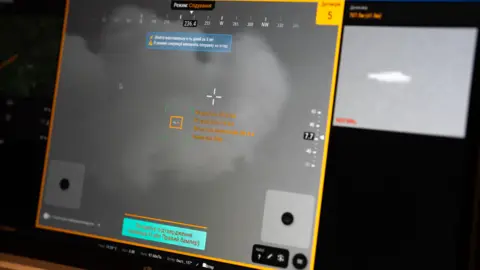
Simultaneously, Ukraine has been developing its own solutions, including mobile fire teams operating heavy machine guns on trucks and interceptors that can be produced affordably in large quantities. These efforts are made possible in part by a software called Sky Map that utilizes AI, radars, and sensors to monitor incoming threats.
The P1-SUN interceptor drone, which can reach speeds of over 300km/h and is produced in large numbers, has become a critical component of Ukraine's defense strategy. These drones effectively neutralize Russian drones at a fraction of the cost of sophisticated systems.
Private companies have also joined the defense effort, establishing systems to protect critical infrastructure, while civilians are being trained to operate remote weapons systems, making the defense a shared national effort.
Despite some successful developments, Ukraine still faces significant challenges, particularly with advanced Russian technology, and the brutal toll of aerial warfare continues as both sides innovate to gain an upper hand.