'The answer cannot be nothing': The battle over Canada's mystery brain disease
Five hundred patients in the small Canadian province of New Brunswick have been diagnosed with a baffling neurological condition, igniting questions about its existence and the response from the medical community. But what does it mean for those affected if it turns out no such disease exists?
In early 2019, physicians became aware of rare cases of Creutzfeldt-Jakob Disease (CJD), a severe brain condition that is fatal and potentially contagious. As neurologists and scientists began investigating, word spread of another group of patients exhibiting mysterious but similar CJD-like symptoms, leading to the realization that something much larger was at play.
Dr. Alier Marrero, a neurologist in New Brunswick, began reporting numerous cases of young individuals suffering from rapidly advancing cognitive decline and a troubling array of symptoms including dementia, insomnia, and hallucinations. Despite many tests pointing to negative results for CJD, the number of patients reported surged to more than 500 over the subsequent years.
Researchers speculated various environmental causes, with some facing backlash for suggesting links to herbicides used in the forestry industry in the area. As the wave of diagnostic uncertainty unfolded, a recent study claimed the cluster was a result of multiple pre-existing medical conditions rather than an undiscovered disease, throwing many patients into a state of disbelief.
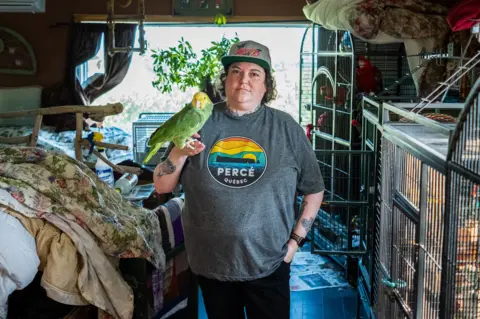
Advocates and patients have maintained that they are victims of industrial poisoning and a government cover-up. As reported by Jillian Lucas, one of the affected, the situation reached a point where she began to consider medical assistance in dying.
Pressure mounted as patients felt unseen, and the medical establishment grappled with how to respond to these clusters of symptoms that challenge traditional understanding of neurological disorders. While Marrero's patience grew, so too did fears of misdiagnosis amidst calls for thorough investigations.
The New Brunswick case presents a complex intersection of health science, patient advocacy, and systematic failures in healthcare that continues to resonate in the local and national discourse around patient care and environmental responsibility.