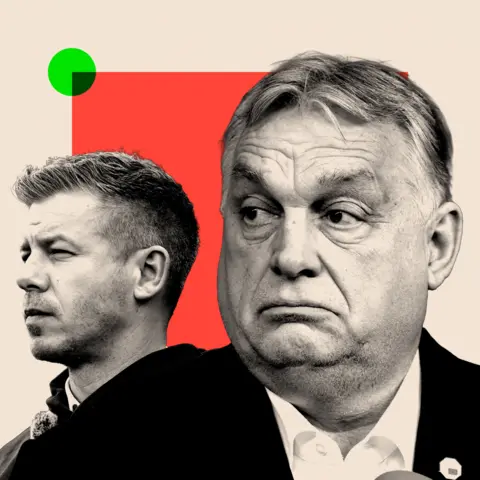
Viktor Orban Faces Unprecedented Challenge: Can He Retain Power?
Over the past 16 years, Hungarian Prime Minister Viktor Orban has been a dominant figure in his country's politics, but as the April parliamentary elections approach, he is encountering a well-organized and energized opposition. In a recent rally, Orban displayed an unusual level of frustration, labeling his opponents as spreading anger, hatred, and destruction while the Tisza party’s leader, Peter Magyar, is gaining ground in the polls.
Polls indicate a dramatic shift in public sentiment, with some showing the Tisza party at a remarkable 58% support against Orban's 35%. This change marks a significant retreat from Orban's historically unchallenged status, prompting him to intensify his campaign efforts after past elections during which he focused less on voter mobilization.
Orban's governance has defined an era heavily influenced by alliances with right-wing leaders, including support from Donald Trump and Vladimir Putin. However, as hunger for change grows among voters—especially the youth—his government is increasingly viewed as part of a "corrupt ruling elite."
In the lead-up to the elections, Orban has utilized a strategy that paints Tisza's Magyar as a puppet of European interests, suggesting that a vote for Tisza equates to endorsing war against Russia. This narrative, although resonant with some, is being challenged as more citizens recognize the need for accountability and transparency in Hungary's governance.
While the elections are rife with tension, potential allegations of voter manipulation and intimidation have emerged. Claims surfaced alleging that Fidesz party operatives have implemented disturbing tactics, including financial coercion to secure votes, showcasing the lengths to which the ruling party might go to maintain its grip on power.
The upcoming election is shaping up to be much more than a local political contest; it is seen as a referendum on populist policies in Europe at large. A failure for Orban could signal a broader downturn for similar nationalist movements across the continent.
As the election date approaches, the outcome remains uncertain, but the discontent brewing among voters suggests that Hungary could be on the brink of a significant political transformation.