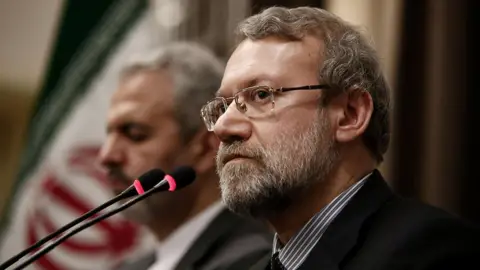
The Israeli air strike which killed Iran's security chief, Ali Larijani, has removed one of the Islamic Republic's most experienced and influential policymakers at a critical moment.
Larijani was not a military commander, but he was a central figure in shaping Iran's strategic decisions. As secretary of the Supreme National Security Council, he sat at the heart of decision-making on war, diplomacy, and national security. His voice carried weight across the system, particularly in managing Iran's confrontation with the United States and Israel.
After the killing of Supreme Leader Ali Khamenei on 28 February, Larijani struck a defiant tone, signalling that Iran was prepared for a long conflict. His death, now confirmed by state media, comes amid a broader campaign in which several senior Iranian officials and commanders have been killed within a matter of weeks. This pattern suggests a sustained effort to weaken Iran's leadership structure during wartime.
Despite his hardline stance against the West, Larijani was often described inside Iran as a pragmatist, combining ideological loyalty with a technocratic approach, favouring calculated strategy over rhetoric. He remained deeply sceptical of engagement with Western powers but was also involved in key diplomatic efforts, including acting as an envoy in Iran's long-term cooperation agreement with China.
At the time of his death, Larijani was managing three major crises: the ongoing war, widespread domestic unrest, and complications surrounding Iran's nuclear programme. The removal of such a key figure leaves these issues unresolved and introduces a very fragile situation for his as-yet-unknown successor. With continued strikes likely, any new leader will be under immediate threat.
As leadership dynamics evolve, there are indications of a potential shift in power towards the military, with recent remarks implying armed forces may take on broader authority in the absence of senior leadership.
The implications of Larijani's death extend far beyond the loss of one official. It exacerbates a crisis at the heart of Iran’s governance that could significantly impact both the ongoing war and the overarching stability of the Iranian state.
Larijani was not a military commander, but he was a central figure in shaping Iran's strategic decisions. As secretary of the Supreme National Security Council, he sat at the heart of decision-making on war, diplomacy, and national security. His voice carried weight across the system, particularly in managing Iran's confrontation with the United States and Israel.
After the killing of Supreme Leader Ali Khamenei on 28 February, Larijani struck a defiant tone, signalling that Iran was prepared for a long conflict. His death, now confirmed by state media, comes amid a broader campaign in which several senior Iranian officials and commanders have been killed within a matter of weeks. This pattern suggests a sustained effort to weaken Iran's leadership structure during wartime.
Despite his hardline stance against the West, Larijani was often described inside Iran as a pragmatist, combining ideological loyalty with a technocratic approach, favouring calculated strategy over rhetoric. He remained deeply sceptical of engagement with Western powers but was also involved in key diplomatic efforts, including acting as an envoy in Iran's long-term cooperation agreement with China.
At the time of his death, Larijani was managing three major crises: the ongoing war, widespread domestic unrest, and complications surrounding Iran's nuclear programme. The removal of such a key figure leaves these issues unresolved and introduces a very fragile situation for his as-yet-unknown successor. With continued strikes likely, any new leader will be under immediate threat.
As leadership dynamics evolve, there are indications of a potential shift in power towards the military, with recent remarks implying armed forces may take on broader authority in the absence of senior leadership.
The implications of Larijani's death extend far beyond the loss of one official. It exacerbates a crisis at the heart of Iran’s governance that could significantly impact both the ongoing war and the overarching stability of the Iranian state.