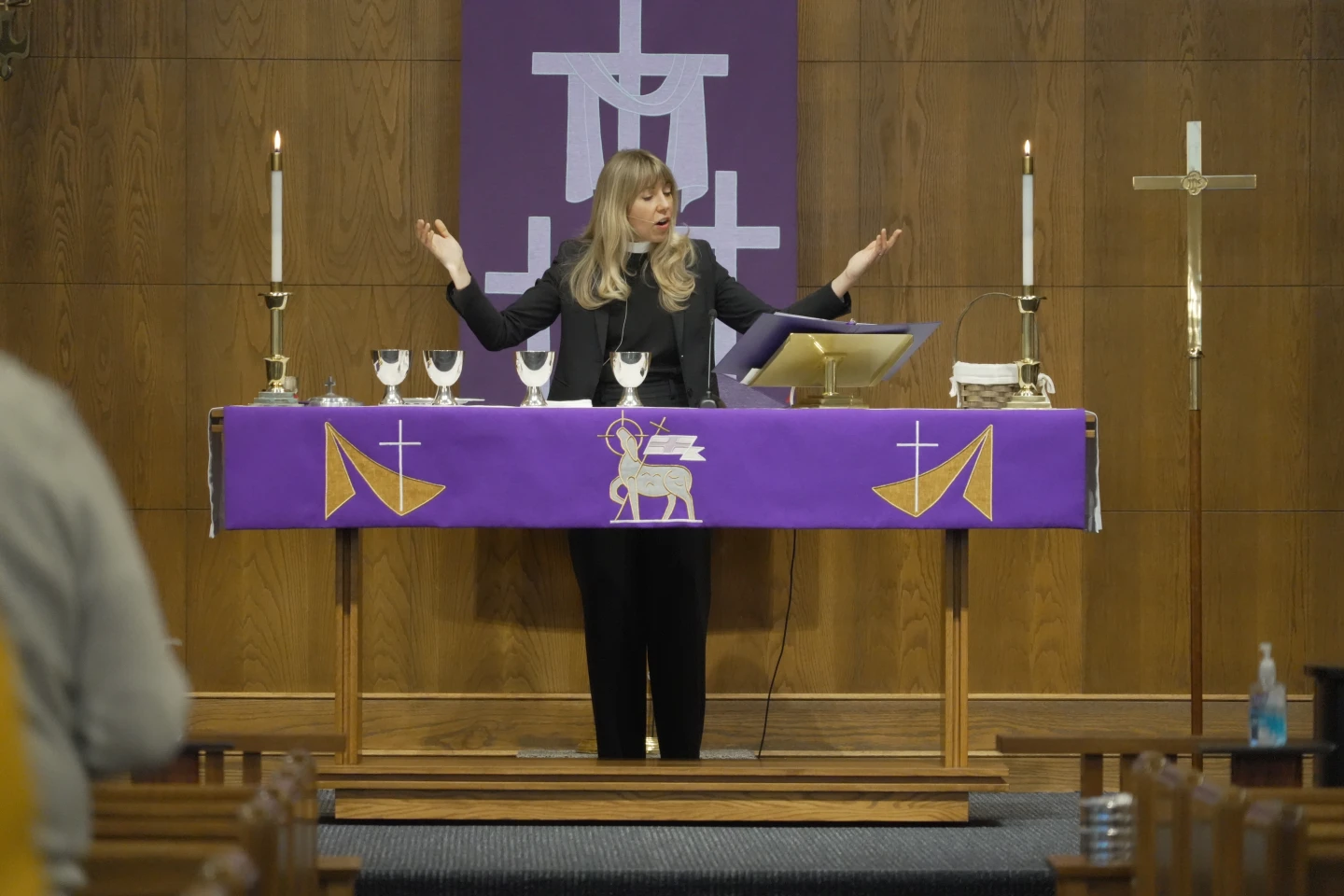
DES MOINES, Iowa – The Rev. Sarah Trone Garriott is bridging the gap between faith and politics with her candid discussions ranging from health care to inclusivity at Grace Lutheran Church. On any given weekend, her agenda includes delivering sermons on welcoming strangers while also campaigning for Congress in rural Iowa, advocating against Medicaid cuts. She's among three clergy members running as Democrats for the U.S. House in a shifting political landscape where faith is not limited to conservative narratives.
Once dominated by white Christians favoring Republican candidates, the political scene is witnessing a growing representation of progressive clergy. Figures like Presbyterian seminarian James Talarico, who recently won a Texas primary for U.S. Senate, illuminate this trend. They aim to shift how faith is perceived in the political arena, focusing on compassionate approaches to policy that resonate with diverse communities.
Melissa Deckman, CEO of the Public Religion Research Institute, highlights the opportunity for Democrats to define the political discourse around faith differently. She notes that acknowledging religious diversity is key, especially when voters express discontent with the dominance of Christian nationalist ideologies within conservative circles.
Even amid significant challenges, such as re-engaging certain religious demographics that feel marginalized by the Democratic narrative, some leaders believe it is crucial to communicate their collective motivations authentically. When we stop talking about our why, we lose our authenticity, commented Democratic Kentucky Governor Andy Beshear, emphasizing the importance of connecting personal faith to broader policy efforts.
Prominent indicators from the 2024 election illustrate a stark division among religious voters, with sweeping Pew surveys revealing President Trump's stronghold among evangelical Christians contrasting sharply with support for Democrats from Black Protestant and non-religious voters. This divide underscores the urgent need for progressive candidates to communicate their religious values in a way that welcomes diverse interpretations rather than alienating them.
Emphasizing their unique experiences, clergy running for office advocate for empathy and inclusivity, framing religion as a source of strength in enacting progressive change. With leaders like Talarico and Trone Garriott standing up amid the political complexities, their calls for dialogue on faith aim to reclaim the narrative from the religious right and foster a more inclusive, compassionate political discourse. As the landscape of American faith continues to evolve, their efforts reflect a broader yearning for reform that resonates with voters across the spectrum.