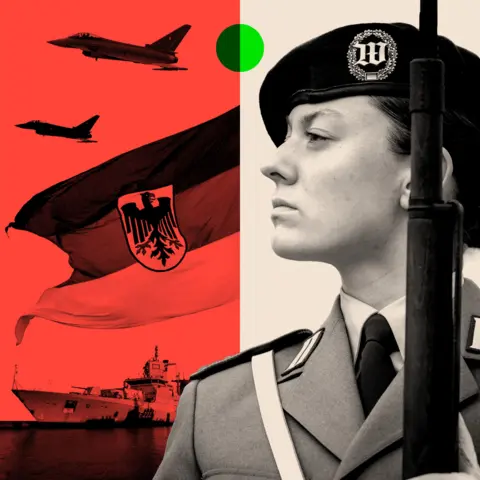
General Carsten Breuer is a man in a hurry. As head of Germany's armed forces, he has been tasked with the rapid expansion of Germany's military, aiming to transform it into Europe's most powerful fighting force. Breuer warns that Russia's ongoing enhancement of its military capabilities poses a threat that could culminate in a potential attack on NATO territory by 2029. I've never experienced a situation which is as dangerous, as urgent, as it is today, he noted at a military base in Munster, near the Dutch border.
Under Breuer's command, a major overhaul of the German armed forces is underway. The government plans to increase military spending from €95 billion in 2025 to €162 billion by 2029—a move supported by the public, signaling a significant shift in Germany's defense priorities. This radical shift comes in the wake of a history laden with the consequences of militarism and attempts to atone for past aggressions.
Now, however, Germany's government is responding to new threats, exemplified by nearly 1,200 troops stationed in Lithuania, marking the first permanent military presence since the Nazi era. The military's capabilities are being modernized, and Breuer aims to increase service personnel from 182,000 to potentially 242,000 in the next decade, alongside a robust reserve force.
Germany is striving for operational independence, ramping up domestic munitions production to reduce reliance on U.S. arms manufacturers—a reflection of changing attitudes towards military engagement. With support from its neighbors and a renewed commitment to international collaboration, Germany embarks on a path to redefine its military role on the European stage.