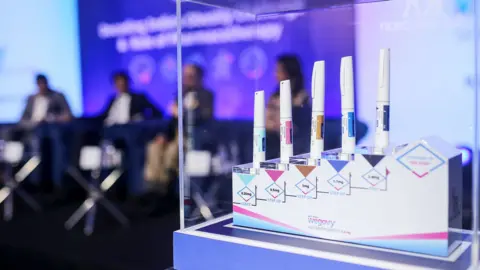
India could soon get a lot thinner - at least in theory. On Friday, the patent on semaglutide, the molecule behind the blockbuster weight-loss drugs Wegovy and Ozempic, expires in the country. This will allow domestic pharmaceutical companies to release cheaper copies or generics, triggering a rush of competition that could slash prices by more than half and rapidly expand access for people in India and potentially in other countries too. Investment bank Jefferies has called it a potential magic-pill moment for India, predicting the semaglutide market could eventually reach $1 billion domestically with the right pricing and uptake.
Analysts expect around 50 branded semaglutide generics to enter the market within months. The market is backed by India's robust and competitive pharmaceutical industry, which is known for its generics manufacturing. Currently, the monthly costs of treatments are high: Ozempic typically sells for 8,800 - 11,000 rupees ($95-$119), while Wegovy can cost between 10,000-16,000 rupees ($108-$173). However, once generics enter the market, prices could plummet to approximately 3,000-5,000 rupees ($36-54) per month.
Current demand for anti-obesity medications is also on the rise in India, growing from roughly $16 million in 2021 to close to $100 million recently. There are over 77 million individuals living with type-2 diabetes in India, compounded by unhealthy lifestyles and diets. With cheaper GLP-1 drugs, healthcare professionals expect to expand treatment options for diabetes and obesity significantly.
However, caution is warranted. Healthcare professionals express concerns about the potential for misuse as prices decline, with patients seeking high doses from unauthorized sources like gym trainers or beauty clinics. The Indian government has also issued warnings to pharmaceutical companies against marketing weight-loss drugs directly to consumers without proper medical supervision. As this market evolves, careful regulation will be crucial to balance drug access with patient safety and treatment effectiveness.
Analysts expect around 50 branded semaglutide generics to enter the market within months. The market is backed by India's robust and competitive pharmaceutical industry, which is known for its generics manufacturing. Currently, the monthly costs of treatments are high: Ozempic typically sells for 8,800 - 11,000 rupees ($95-$119), while Wegovy can cost between 10,000-16,000 rupees ($108-$173). However, once generics enter the market, prices could plummet to approximately 3,000-5,000 rupees ($36-54) per month.
Current demand for anti-obesity medications is also on the rise in India, growing from roughly $16 million in 2021 to close to $100 million recently. There are over 77 million individuals living with type-2 diabetes in India, compounded by unhealthy lifestyles and diets. With cheaper GLP-1 drugs, healthcare professionals expect to expand treatment options for diabetes and obesity significantly.
However, caution is warranted. Healthcare professionals express concerns about the potential for misuse as prices decline, with patients seeking high doses from unauthorized sources like gym trainers or beauty clinics. The Indian government has also issued warnings to pharmaceutical companies against marketing weight-loss drugs directly to consumers without proper medical supervision. As this market evolves, careful regulation will be crucial to balance drug access with patient safety and treatment effectiveness.