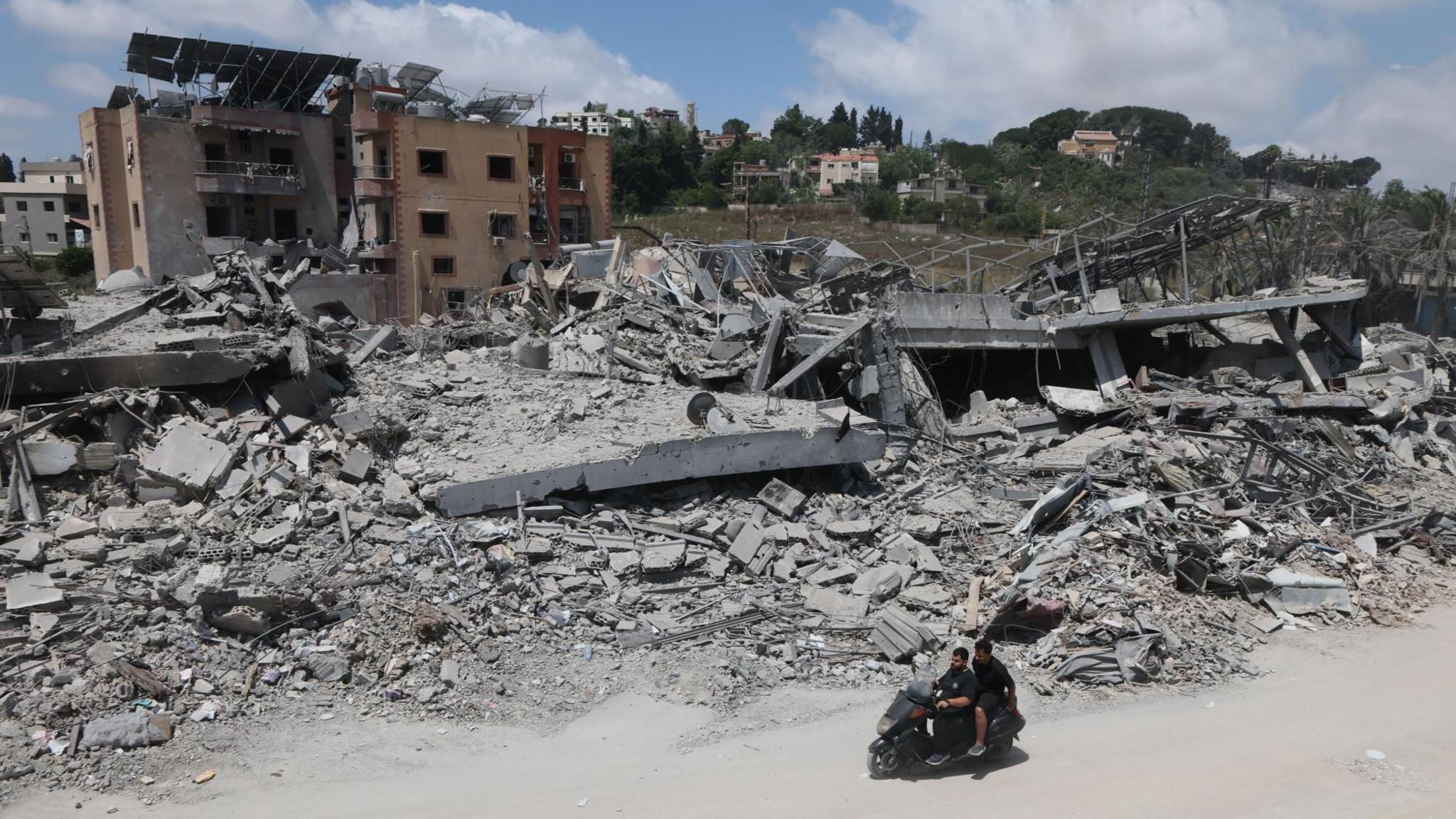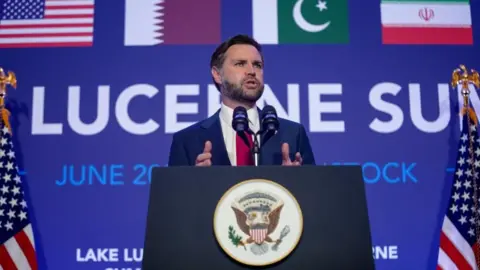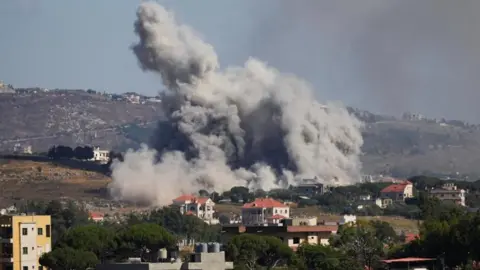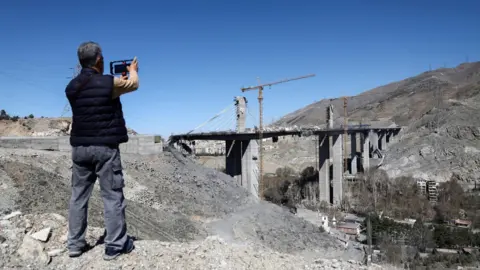
US President Donald Trump has warned Iran of impending strikes on its infrastructure if its leaders do not comply with his demands. This ultimatum came after an airstrike that targeted the B1 bridge in Karaj, which resulted in the death of eight individuals and injuries to nearly one hundred on the 13th day of the Nowruz holidays.
The attack deeply unsettled the local populace, many of whom were enjoying a picnic when US warplanes struck the bridge. ‘I feel helpless,’ lamented a woman in Tehran who expressed feelings of fear and vulnerability in light of the recent events. ‘[Trump] posts shamelessly about attacking our bridge,’ she added, clearly distraught over the escalating conflict. Another Tehran resident echoed this sentiment, expressing sadness over the destruction of their country.
Amidst the escalating attacks and a protracted internet blackout since 35 days, communication has become increasingly challenging for Iranians seeking to convey their experiences and concerns. The fear of future strikes looms large, with many questioning what American leaders will target next.
In direct response to the airstrike, Iranian officials condemned the actions as ineffective in subduing the Iranian spirit, suggesting that such attacks only reflect the moral decay of their adversaries. Iranian Foreign Minister Abbas Araghchi emphasized that striking civilian structures will not lead to Iranian capitulation. Overall, the atmosphere in Iran is charged with a mix of fear, helplessness, and a resolve among some to retaliate in response to perceived threats.