In brief
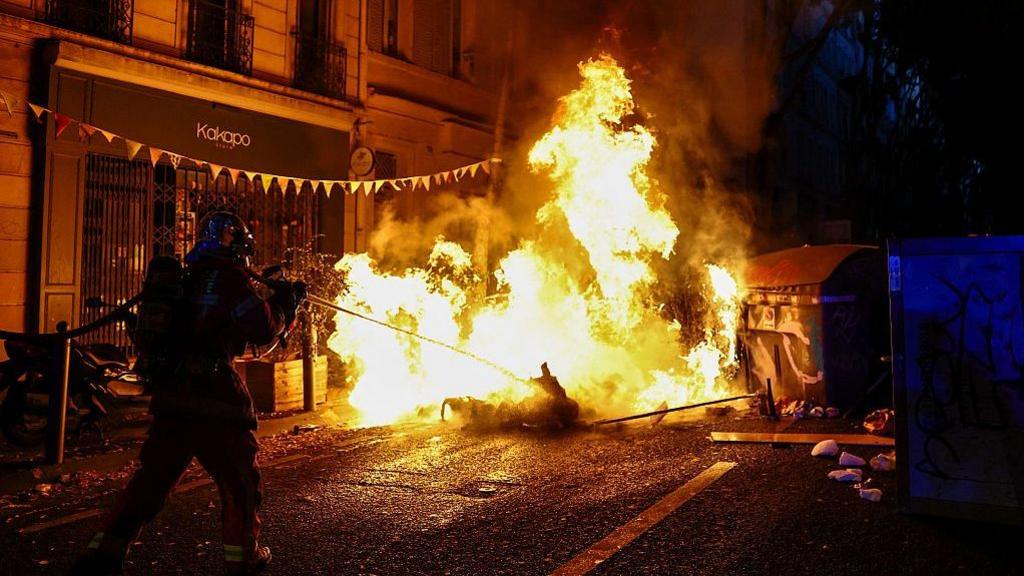
Hundreds of thousands took to the streets in France to protest rising living costs and poor school conditions. Police fired tear‑gas and used water cannons in Paris, Marseille, Bordeaux and Lyon, leading to clashes, fires and the arrest of nearly 1,000 people. Despite the scale of the unrest, authorities say widespread looting was avoided compared with last weekend’s riots, which cost the country an estimated hundreds of millions of euros in damage. The unrest comes ahead of France’s presidential election in six months, with critics of Macron’s administration calling for a change.
On Saturday, mass protests across France over rising living costs and school conditions escalated into clashes, tear‑gas, and fires. Authorities report almost a thousand arrests across major cities, a spike from the few hundred detained last weekend.
Police forces deployed about 70,000 officers and imposed curfews in Paris, Marseille, Bordeaux and other cities after protests turned violent. Tear‑gas grenades were fired in Lyon, water cannons were used in Paris, and a law‑enforcement vehicle drove through a burning barricade in Marseille’s port.
Scale of the unrest
The Interior Ministry estimates that 410,000 people marched in Paris alone, while unions claim up to 800,000 took part. The total number of arrests on Saturday reached nearly 1,000, with the figure expected to rise as investigations continue. Two individuals were reported seriously injured in Toulouse and Clermont‑Ferrand.
Police tactics and public response
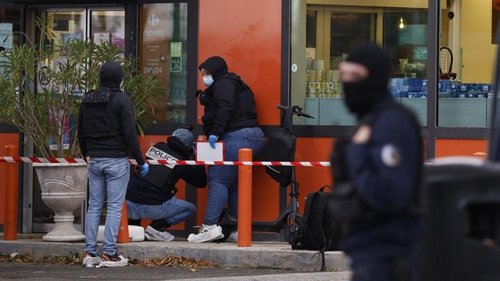
President Emmanuel Macron had earlier restricted legal demonstrations to those organised by recognised trade unions. In Paris, an elite unit handling organised crime and counter‑terrorism engaged protesters who were pelting officers with stones and building makeshift barricades.
"We really want a change in France," a teenage protester told journalists in Paris.
One protester in Lyon described the sudden tear‑gas: "There were around 150 of us, mostly secondary school and university students. Then the tear gas came almost immediately. You could barely see anything in the street."
Broader European context
Clashes spilled beyond France’s borders: in Brüssel, police fired tear‑gas on anti‑government demonstrators, and in Milan, a large security operation prevented a gathering that could have echoed last week’s violent scenes. In Albania’s Tirana, riot police also used tear‑gas.
Last weekend’s demonstrations, which drew about 550,000 people, already led to more than 2,500 arrests and damage estimated at hundreds of millions of euros. Protesters cite poverty, police brutality and the perception of a neglected younger generation as key motivators.
The current wave of unrest comes six months before France’s presidential election, with critics of Macron pointing to rising tensions and systemic grievances as a sign that a change in leadership may be imminent.
© BBC News. All rights reserved.