In brief
A tense night unfolded outside the New Jersey ICE facility in Newark, where demonstrators used makeshift barricades and shouted chants at armed federal officers. ICE pepper‑sprayed protestors and used batons, while lawmakers and humanitarian groups questioned the treatment of detainees inside the facility. Six protesters were arrested; the federal government vowed to prosecute any assault on law‑enforcement.
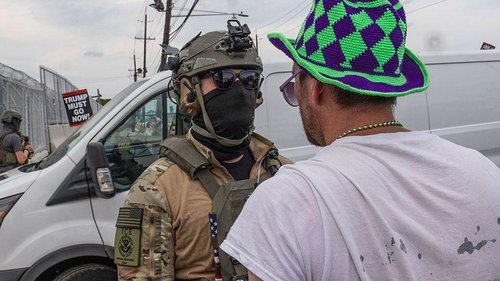
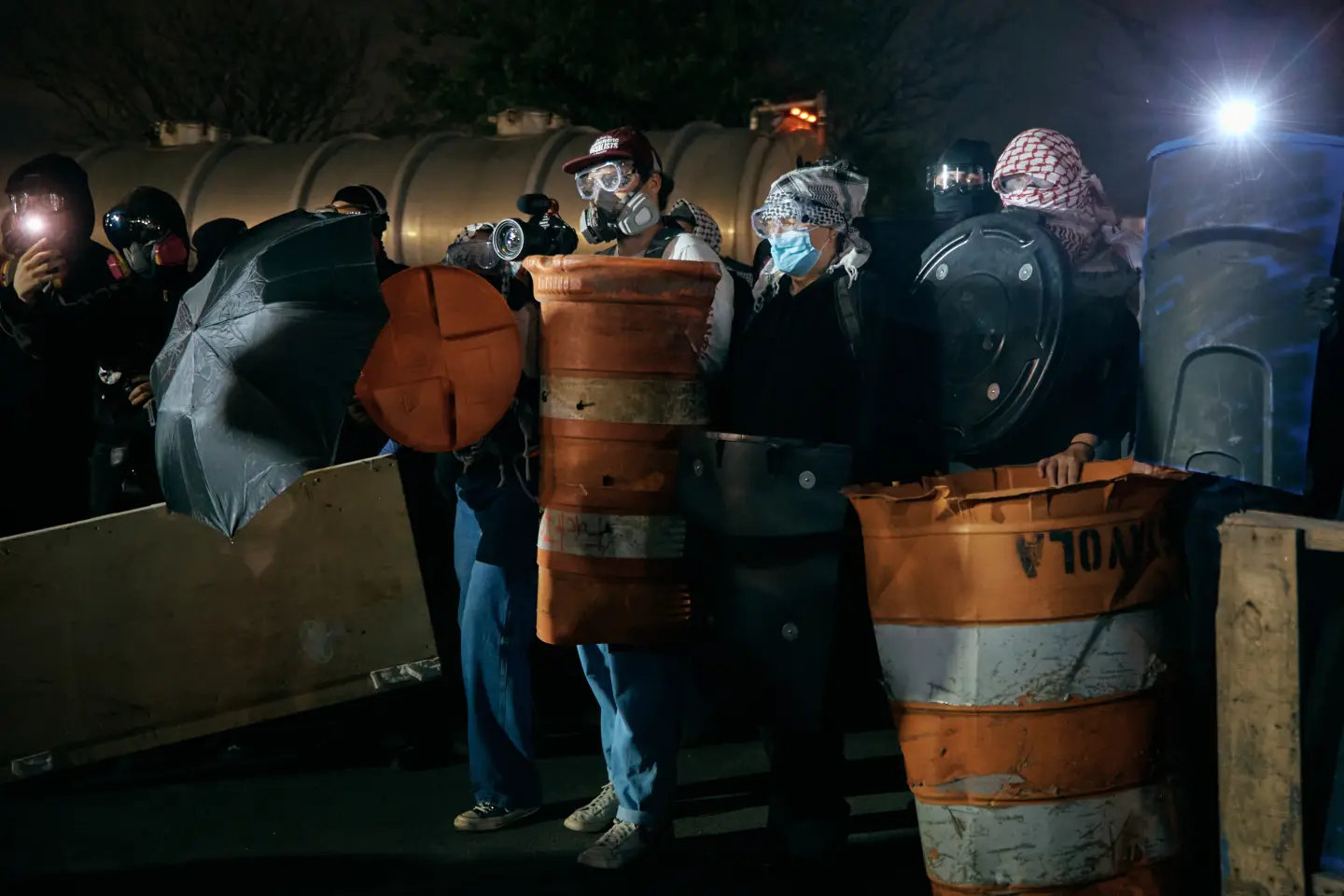
Newark’s Delaney Hall, a privately run prison that houses federal migrants, became the epicenter of a heated confrontation last Wednesday evening. Protestors—many wearing gas masks and other face coverings—lined the street with a human chain, holding trash cans, umbrellas, and even mattresses as improvised shields. They blocked vehicles and threw orange traffic cones toward ICE officers, while the federal agents, equipped with helmets and tactical vests, fired pepper spray and swore to maintain control.Video footage shared by social‑media users captures the chaos: protestors chanting, “You will hang!” and “Every cop, every fed, shoot yourself in the head,” echo off the building’s walls while an officer in a tactical vest counters with a baton. “The officers' reactions were swift and overwhelming. We were shouted at, pepper‑sprayed, and shoved,” said one protestor captured on video.The U.S. Department of Homeland Security announced that about six demonstrators had been arrested on charges of assaulting law‑enforcement officers. DHS released a statement saying that “Assaulting and obstructing ICE law‑enforcement is a crime and felony. Anyone who assaults law‑enforcement will be prosecuted to the fullest extent of the law.”Earlier that day, a bipartisan group of New York‑based congressmen—Reps. Jerry Nadler, Daniel Goldman, and Adriano Espaillat—toured the facility as part of an oversight visit. The three lawmakers described “dire conditions” where detainees reportedly receive small portions of often spoiled food and their medical needs appear to be ignored. While a DHS spokesperson denied reports of a hunger strike, abuse, or poor conditions, they dismissed the criticism as political posturing.The detention center sits on an industrial stretch of Newark Bay, within a complex managed by a private prison company. Despite the federal agency’s assurances, activist groups and the congressmen’s oversight have called the conditions unacceptable. “We are witnessing a systemic failure that subjects those bound by law to de‑humanized treatment,” said Rep. Nadler during the site visit.Outside the center, a truck driver temporarily left his vehicle to vent frustration as protestors blocked the road. Inside the gates, detainees could be seen waving from the windows of Delaney Hall, ‘a silent plea’ for the outside world to hear.This confrontation marks a continuation of the growing movement demanding transparency and humane treatment for federal detainees. While the federal government pledges to prosecute any assault on law‑enforcement, activists insist the real dereliction lies in the conditions these cells impose. As lawmakers initiate further investigations, citizens of Newark found themselves at the front line of a debate about the nation’s immigration system and the ethics of detention.