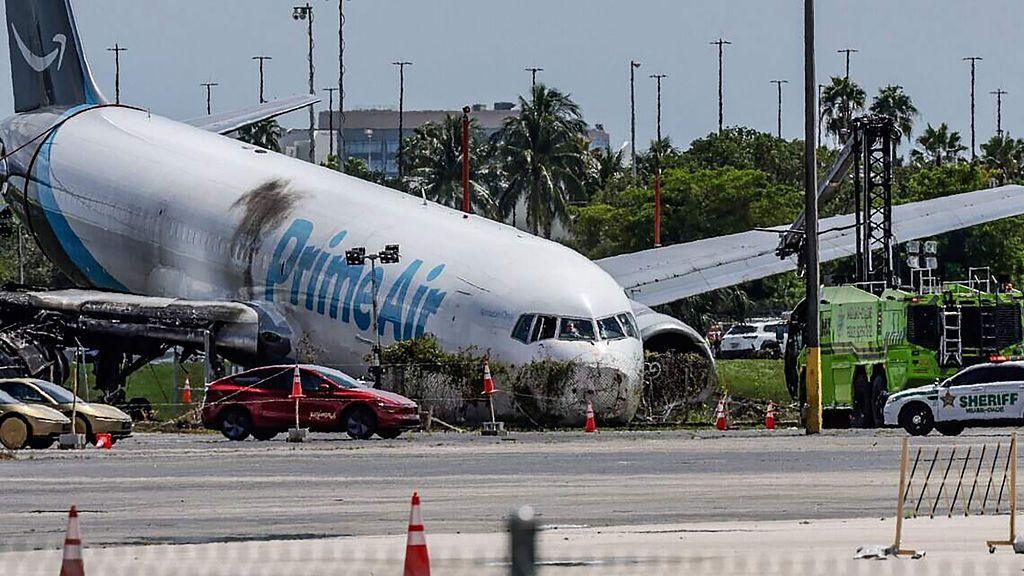
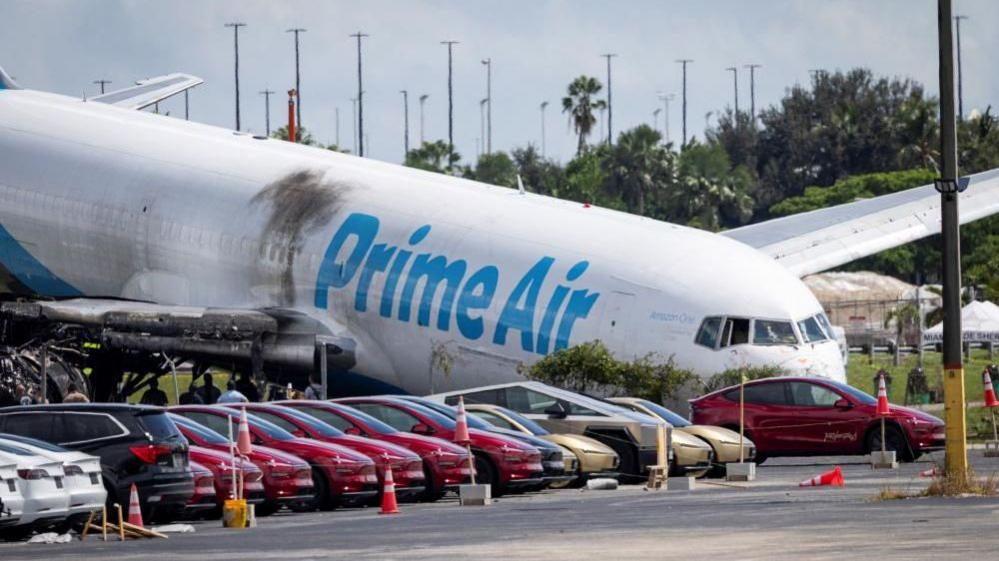
On May 3, a United Airlines Boeing 767 landed at Newark Liberty International Airport after a flight out of Venice, Italy. The aircraft, carrying more than 200 passengers, came in remarkably low and slow, a situation the pilots described as “you are still slow and a little low,” according to the National Transportation Safety Board (NTSB) preliminary report.
During the final approach, the crew was prepared for several possible runway options while battling headwinds that gusted up to 31 mph. The pilot reported, “I got fast” as he turned into the wind, pulling power back to compensate for moderate turbulence.
At the moment of touchdown, the aircraft struck a visible light pole that clogged the runway. The pole’s sharp metal emerged from the fuselage and the resulting debris later hit a bakery delivery truck on the nearby stretch of the New Jersey Turnpike. Dashboard video from the truck captured the moment: a driver singing, then glancing out the window when the plane’s engines roared, followed by an impact that caused the truck’s windshield to crack and its trailer to puncture.
Investigators noted that the truck’s windshield was damaged and its trailer punctured, but there was no evidence of tire marks on the tractor cab or trailer. The Boeing 767’s landing gear sustained “substantial” damage, including slash marks on one tire, yet all passengers and crew remained unharmed.
The incident occurred on Newark’s shortest runway—6,726 feet (2,050 meters). Although pilots often fly low over the highway on this approach, the combination of strong wind and the runway’s length posed a challenge that nearly resulted in a collision.
The NTSB report emphasized that no single cause of the misalignment has been identified yet. It also clarified that debris from the light pole struck the truck—rather than the aircraft—after the collision. A final report that may offer recommendations is expected next year.