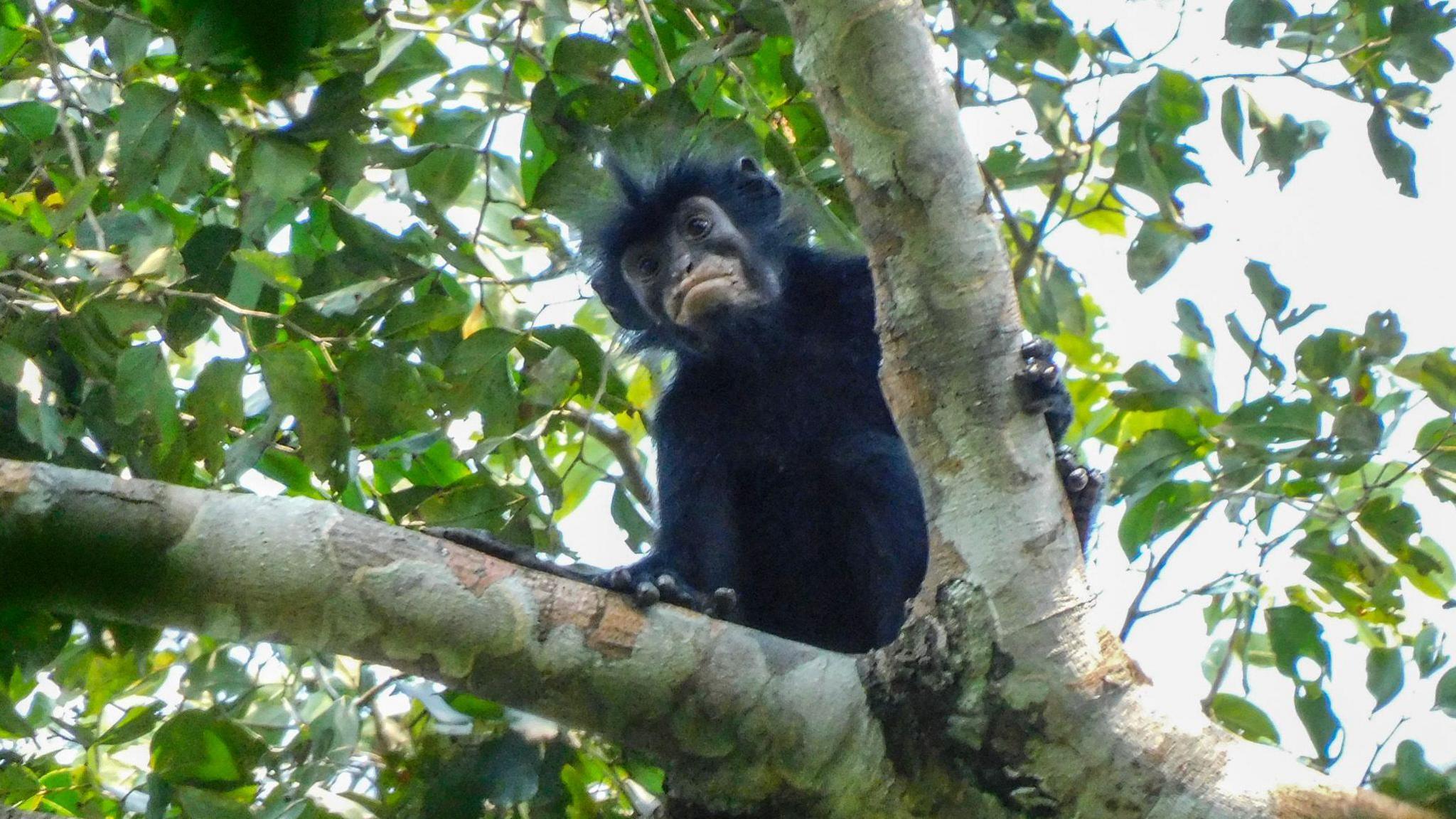
In the heart of Africa’s dense tropical forest, a black‑faced primate with a distinctive pinkish‑orange lip band has been officially named a new species – Colobus congoensis, also known locally as Likweli.
The discovery began in 2008 when conservationists in Lomami National Park made an unplanned glimpse of the shy monkey high in the canopy, capturing a blurry image that would later spark intrigue. A decade later, researchers returned to the same site and, using a combination of audio recordings, high‑resolution photography, and DNA analysis, confirmed the animal’s unique genetic identity.
This marks only the fifth new African monkey species to be described in the last 75 years, underscoring how little is still known about the continent’s forest inhabitants. The international team—comprising scientists from the DRC, the United States, and Germany—named the species in honour of its home country’s biodiversity.
Local villagers, who have known of the Likweli for years, first noticed the monkey’s striking orange lips and referred to it by the nickname “Likweli” – a word that reflects its close connection to people’s everyday lives. The researchers interviewed residents in 52 villages, noting that only eight had actually seen the primates.
Colobus congoensis is an herbivore that spends most of its time high in the forest canopy, feeding on leaves, fruit, and seeds. Scientists believe that it plays a vital role in processing seeds and promoting forest regeneration – an ecological function that is still poorly understood for this group of monkeys.
One of the species’ most striking traits is its resonant “roaring” call, which echoes through the trees. While hikers may hear it, few have ever caught sight of the monkey, which prefers to remain concealed from ground‑level observers.
Because of its rarity and the hunting pressure on many canopy‑dwelling primates, the discovery of Colobus congoensis provides an essential opportunity for legal protection. By formally recognizing the monkey as a distinct species, conservationists hope to safeguard it under regional wildlife protection laws.
The team plans next‑phase surveys to estimate the population size of the species and to conduct more detailed behavioral observations – a crucial step toward understanding how the monkeys communicate, reproduce, and navigate the complex jungle environment.
The newfound oracle of the Congo’s forests, with its bright facial markings and unique vocalizations, stands as a reminder that the planet still keeps secrets close to the canopy, waiting to be uncovered by curious eyes and careful ears.