Philippine President Ferdinand Marcos Jr. has pledged to secure new sources of oil as the country deals with an energy emergency declared in the wake of rising global fuel prices due to the ongoing conflict in Iran. In a televised address, Marcos stated that the government plans to procure an additional one million barrels of oil to ensure supply, amid concerns that the nation's stock is only sufficient for 45 days.
We will have a flow of oil. Not just one delivery, not two deliveries, but a flow of oil-related products, Marcos reassured the public.
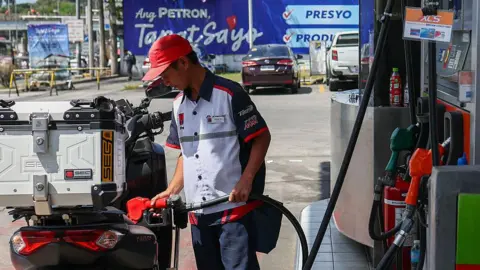
With the Philippines relying on imports for nearly all its oil—98% from the Gulf region—the escalation in conflict has led to a significant increase in local diesel and petrol prices, which have more than doubled since the war began on February 28.
The President's declaration enables the government to implement measures aimed at energy stability and economic protection during this crisis. Nothing is off the table. We are looking at everything we can do, whatever suggestion, whatever idea, he said.
Philippine Ambassador to the US, Jose Manuel Romualdez, revealed that Manila is negotiating with Washington for exemptions that would allow oil imports from countries facing US sanctions. Under the new emergency measures, a committee will be established to oversee the distribution of essential goods, including fuel and food.
Despite the government's assurances, local labor unions, including the Kilusang Mayo Uno (KMU), have criticized the emergency declaration, calling it an admission of failure and highlighting concerns over provisions that could restrict workers' rights. Protests are already brewing, with transport workers planning a two-day strike in response to the sudden hike in fuel costs and a perceived inadequate governmental response.
As the energy crisis unfolds, Secretary of Energy Sharon Garin indicated that the Philippines may temporarily rely more on coal-fired power to mitigate challenges associated with rising liquefied natural gas (LNG) costs.
This energy emergency marks a critical point for the Philippines as it navigates the complex interplay of global oil markets and domestic economic pressures in an increasingly volatile geopolitical climate.