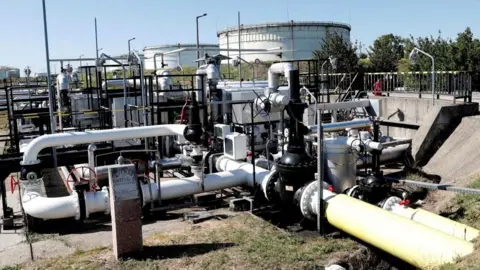
Slovenia has become the first EU member state to implement fuel rationing to tackle disruptions caused by the US-Israeli strikes on Iran and its retaliation on their allies in the Gulf - most major players in world energy markets.
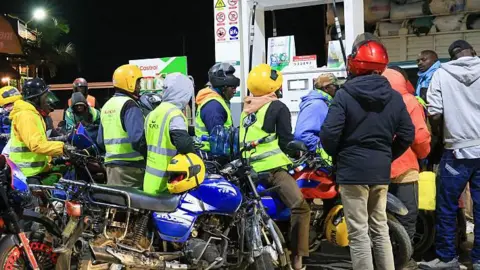
Many countries have been experiencing steep hikes in fuel prices.
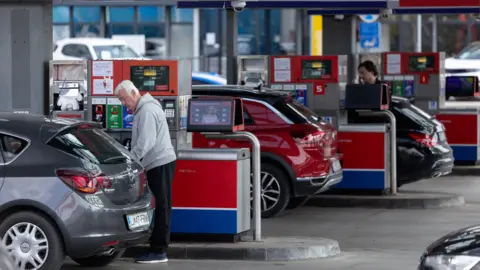
In Slovenia, this has resulted in so-called 'fuel tourism', as drivers from neighbouring countries, particularly Austria, take advantage of the lower, regulated prices here.
Under the new measures, private motorists in Slovenia will be restricted to a maximum purchase of 50 litres of fuel per day. Businesses and farmers have a more generous allowance of 200 litres.
Some fuel retailers had already imposed measures of their own. Hungary's MOL, which operates petrol stations across the region, had already imposed a 30-litre limit.
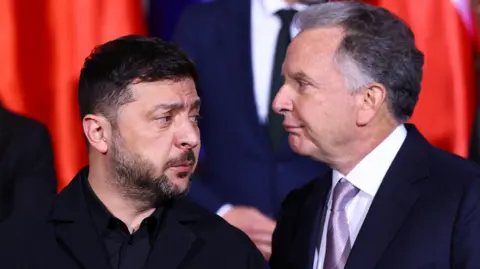
'Let me reassure you that there is enough fuel in Slovenia, the warehouses are full and there will be no fuel shortages,' said Prime Minister Robert Golob at the weekend.
Under his government's new measures, the nationwide restrictions are to be policed by the petrol stations themselves, with employees required to make sure that customers do not stock up on more than the allowed amount of fuel.
The government is also encouraging fuel retailers to introduce stricter limits for foreign drivers.
The price for a litre of Euro-super 95 petrol in Austria is pushing towards €1.80 [£1.56; $2.09], with diesel closer to the €2.00 mark. In Slovenia it is currently held at a maximum of €1.47 and €1.53 respectively, although that is set to rise on Tuesday.
A lorry driver at Sentilj, close to Slovenia's northern border with Austria, was quoted by local media as wondering whether his country was 'at war' as he arrived at a petrol station that had completely run out of fuel.
'I've never experienced anything like this before,' the man added. The stories emerging from the region suggest that he was not alone in his discombobulation.
For some Austrian drivers, the price difference is enough to justify a cross-border hop.
The far-right Austrian politician Herbert Kickl, the leader of the Freedom Party, has been using his refuelling trips as political propaganda, posting a photo of a queue of Austrian-plated vehicles waiting to fill up at a Slovenian petrol station.
'Isn't this sad,' he asked, 'that we live in a country where it has become necessary for many to go abroad so that life is cheaper?'
Some Slovenians view the visitors as a nuisance, causing queues and shortages for locals. Others, however, are more welcoming - noting that a good proportion of 'fuel tourists' make a day of it, eating in local restaurants and spending time in the shops.
Making the best of it is probably the best option. Because as long as the price disparities continue, the 'fuel tourists' will continue to flow across the border.
}