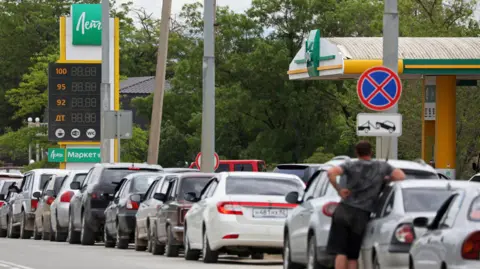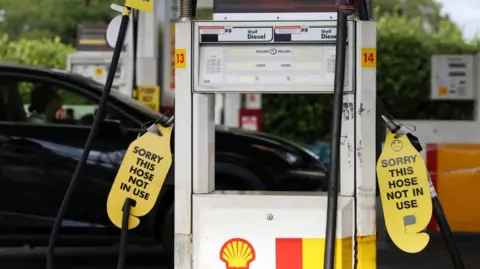
The Australian government has encouraged people to go ahead with their Easter travel plans, despite fuel shortages at hundreds of petrol stations across the country.
Easter is a very special time of faith and family, energy minister Chris Bowen said on Saturday, adding: Go take a break - but get no more fuel than you need.
Fuel prices in Australia have soared since the start of the US-Israel war with Iran and the effective closure of the Strait of Hormuz, a key route for global oil and gas shipments.
Bowen said 312 of Australia's roughly 8,000 service stations had run out of diesel, mostly in rural areas where it takes longer to replenish stocks.
In televised remarks, he said the nation had 39 days worth of petrol, 29 days worth of diesel and 30 days worth of jet fuel in reserve.
Australia imports about 90% of its fuel from the Middle East and has been particularly exposed to the disruption caused by the conflict and Tehran's blockade of the Strait of Hormuz.
The near-total suspension of international shipping in the vital waterway - through which around 20% of the world's oil and natural gas flows - has prompted governments around the world to implement measures to conserve fuel.
In a rare televised address to the nation on Wednesday, Prime Minister Anthony Albanese warned that the economic shock from the Middle East conflict would be felt for months. Australia is not an active participant in this war. But all Australians are paying higher prices because of it, he said.
He encouraged Australians to limit unnecessary fuel use and switch to public transport where possible.
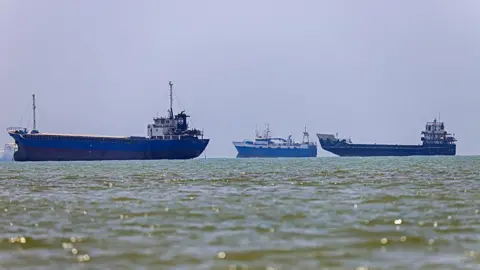
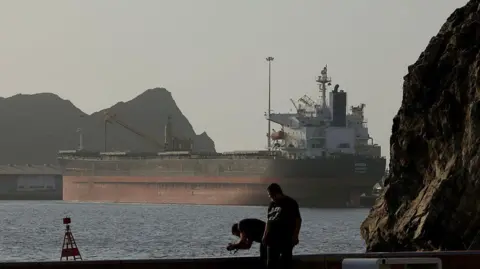
A small number of vessels have passed through the Strait of Hormuz in recent days.
On Friday, a Malta-flagged container ship owned by French company CMA CGM traversed the waterway, according to French media reports. It is unclear how the vessel secured safe passage and the ship's owners have not yet commented.
Shipping analysts reported this was the first vessel by a major Western European firm to go through since the conflict began on 28 February, while a Japanese vessel carrying natural gas also confirmed successful passage.
Traffic in the strait has decreased significantly due to the conflict, but it has not come to a complete halt, with a small number of vessels managing to navigate the critical shipping lane.