Swiss Voters Reject 10‑Million Population Cap
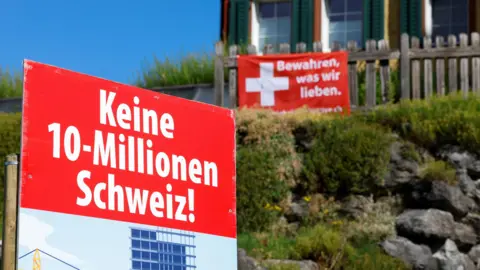
In a decisive referendum, 55% of voters in Switzerland stood against a right‑wing proposal to cap the nation’s population at 10 million—rejecting the plan that would have tightened immigration controls and altered the country’s relationship with the European Union.
The motion, advanced by the Swiss People’s Party (SVP), stemmed from longstanding anti‑immigration rhetoric linking “unchecked” migration to societal strains such as housing shortages, climate pressure, and ageing infrastructure. It was presented in a democracy that allows any citizen to trigger a national vote with 100,000 signatures.
Swiss officials, business leaders, and political opposition criticised the proposal, highlighting its potential to force the abandonment of the EU’s free‑movement agreement. The EU’s open‑market partnership—onto which 50% of Swiss exports depend—would be compromised if the cap stood the test of time.
Justice Minister Beat Jans welcomed the result as a sign of stability, openness, and reliability. EU Commissioner Ursula von der Leyen commended the voters for affirming the deep ties between the Union and Switzerland.
The referendum’s outcome also reflected demographic realities: Switzerland has grown from 7.3 million in 2002 to 9.1 million today, 27% of whom are non‑Swiss citizens. The SVP’s claim that immigration is the primary driver behind pressure on services and environment did not convince many voters.
The counter‑argument echoes concerns that migration or its absence is not the sole driver of social costs. Many Swiss, especially in urban centres, see immigration as key to tourism, healthcare, and other sectors. For instance, Bern recorded an 84% “no” vote, while tourism‑heavy cantons like Graubünden and Valais also opposed the cap.
Economiesuisse’s chief economist, Rudolf Minsch, warned that a successful vote could hamper Switzerland’s relations with the EU, with implications for trade, labour mobility, and defence cooperation. Swiss employers feared potential labour shortages and loss of a Europe‑wide workforce needed to support an ageing population—over 20% of whom are now over 65.
All told, the Swiss electorate has reaffirmed the country’s commitment to openness and European integration, pushing back against a narrative that blames immigration for systemic challenges. Yet, the broader costs and benefits of population growth remain a subject for future political debate.