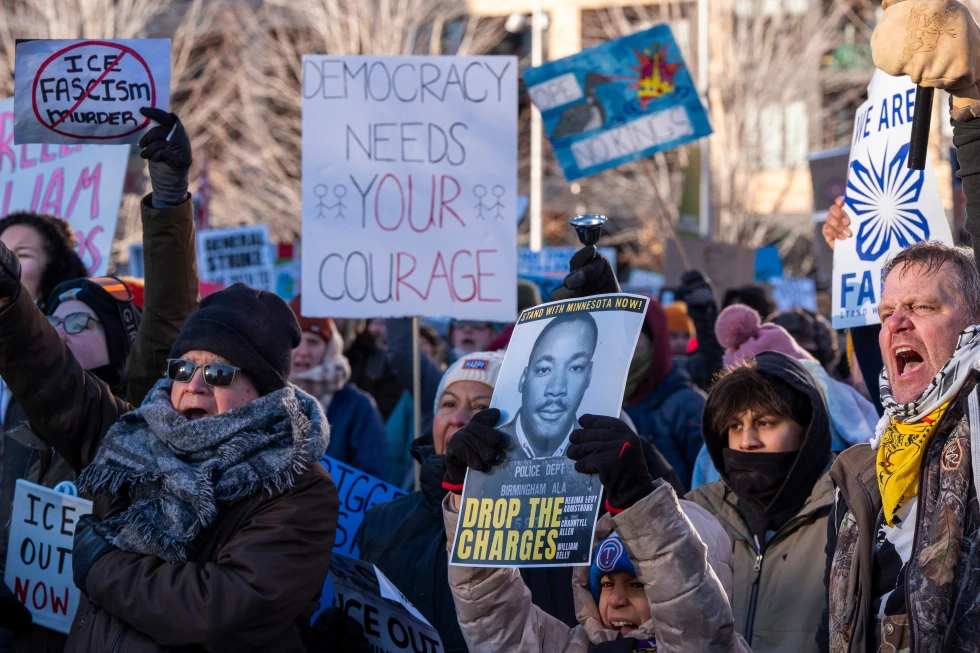
The shooting deaths of protesters Alex Pretti and Renee Good by federal officers in Minneapolis have once again highlighted a troubling pattern in law enforcement response: an immediate attempt to undermine the victims’ narratives. Black families who have mourned similar losses expressed their grief, likening the media's rush to judgement to their own experiences, where the narrative often favors law enforcement.
Timothy Welbeck, director at Temple University's Center for Anti-Racism, termed it regrettable that the killings of Pretti and Good sparked renewed focus on police narratives. His comments were echoed by Clarence Castile, uncle of police shooting victim Philando Castile, who noted the eerie similarity in how authorities responded to the shootings.
“Right away they backed up their officers and said they had justifiable shoots,” Castile remarked. This sentiment reflects a longstanding criticism levied against law enforcement's quick conclusions post-incident without thorough investigations.
Leonard Sipes, a former officer, emphasized that proper protocol involves withholding immediate conclusions until an investigation is complete. “A rush to judgment can violate that,” he stated, underscoring the importance of the agency’s reputation and the integrity of the investigation.
The response to Pretti and Good’s deaths has ignited outrage within the local community. Accusations from officials, targeting the victims as extremists, have further fueled protests against this violent influx of federal law enforcement.
Despite the prevailing narratives suggesting malevolent intentions behind the actions of Pretti and Good, their families advocate for the truth to be told. The family of Pretti released a statement pointing out that recorded evidence contradicted the portrayal of their son.
Frustration lingers among Black activists, who see a double standard in how cases are approached based on the racial identity of the victims. Melina Abdullah of Black Lives Matter emphasized that the struggles faced by Pretti and Good resonate with the daily experiences of Black individuals.
As the conversation continues, public interest in this case emphasizes the need for a collective awakening to the systemic issues affecting justice and fairness in law enforcement protocols, highlighting a significant impact that respect for human life should have across all communities.
Among those resonating with this painful narrative is Tiffany Crutcher, who lost her brother to police violence in 2016. She expressed her inability to watch the videos of Pretti and Good's deaths, noting the emotional toll on herself and the families fighting for justice.
As the broader implications of these incidents unfold, voices from every corner call for scrutiny, transparency, and a reevaluation of how justice is served in cases of police violence, signaling a pivotal moment in America’s ongoing fight against systemic racism in law enforcement.