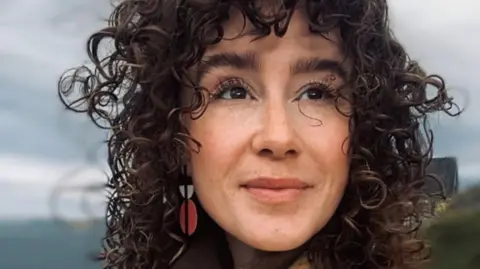
'The people of Greenland do not want to become American,' Mia Chemnitz tells the BBC. 'We are not for sale.'
The 32-year-old business owner in the Greenlandic capital Nuuk reflects the sentiments of many who spoke to the BBC about how they felt about recent rhetoric from the Trump administration.
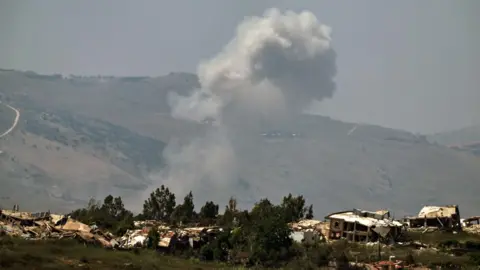
The White House has said it was 'actively' discussing an offer to buy the territory that has for centuries belonged to Denmark. US President Donald Trump and his officials had earlier intimated a willingness to take it by force if necessary.
This has been met with nervousness and opprobrium among Greenlanders - both on the world's largest island and elsewhere.
This nervousness has only grown since the US took Venezuela's President Nicolas Maduro from his residence in Caracas to New York on drug-trafficking and narco-terrorism charges in an unprecedented military move.
Almost immediately after, the wife of a senior White House staffer indicated that Greenland was next.
'That's when it stopped feeling abstract,' says Tupaarnaq Kopeck, 40, who moved to Canada - another place Trump has threatened to annex - for family and work.
'For the first time, I contacted my sister in Greenland and told her that if the unthinkable ever became reality, they would have a place to stay with us.'
Aaja Chemnitz, one of two MPs in the Danish parliament representing Greenland, says the comments from the Trump administration are 'a clear threat' that she was 'appalled' by.
'It's completely disrespectful from the US side to not rule out annexing our country and to annex another NATO ally,' she says.
Greenland is the world's most sparsely populated territory. With much of the Arctic island covered by ice, most of the population lives in Nuuk and the surrounding south-western coastline.
But it is strategically significant to the US - which is why it has had a military presence there since World War 2.
Greenland's location between North America and the Arctic makes it well placed for early warning systems in the event of missile attacks.
More recently, there has also been increased interest in Greenland's natural resources, including rare earth minerals, which are becoming easier to access as its ice melts due to climate change.
'It's not fun being 56,000 people and having these threats - if you can call them that - from a giant like the US,' says Masaana Egede, Editor in Chief from Greenlandic newspaper Sermitsiaq.
'The citizens of Greenland are nervous about this, because this is not something that we take lightly.'
Experts generally agree that a military takeover of Greenland would be an easy undertaking for the US - but that the geopolitical fallout would effectively end the NATO alliance.
After the issue of Greenland's ownership was raised anew by the White House, six European allies issued a statement saying Greenland's future should be decided by its people - something Mia says she is grateful for.
But she worries this will matter little to the US 'if it's not backed with consequences and actions'.
'As a Greenlander, I can't help but wonder: what are we worth to these allies? To what lengths are they willing to go to protect us?'
Tupaarnaq says: 'Respect is about more than alliances on paper. When powerful nations talk about you instead of with you, that respect disappears very quickly.'