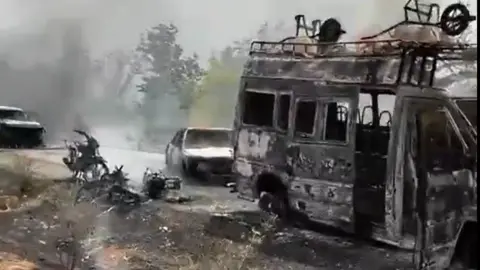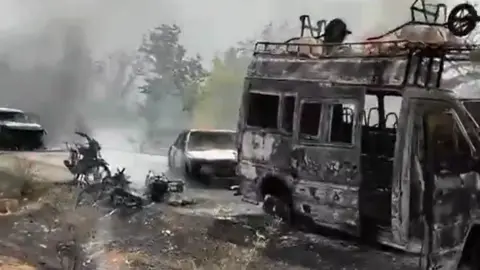
Bamako, Mali's capital, is gripped by renewed crisis as jihadist militants intensify their blockade ahead of Eid al-Adha. The BBC has confirmed that dozens of vehicles—including fuel tankers, minibuses, and trucks—were set ablaze on a road approximately 45km west of the city, with passengers forced to evacuate before ignition. This escalation follows JNIM's tightening of a fuel blockade that began last year after an attack on the capital.
The BBC Verify process authenticated these incidents by matching distinctive buildings in the footage to satellite imagery and checking for AI manipulation. NASA's Firms platform also detected a heat signature at the location, corroborating the reports. The blockade, imposed by the al-Qaeda-linked group Jama'at Nusrat al-Islam wal-Muslimin (JNIM), aims to suffocate Mali's economy and undermine the military government led by Gen. Assimi Goïta.
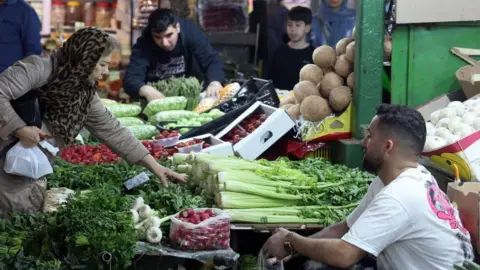
Mali, a landlocked nation dependent on fuel imports from Senegal and Ivory Coast, now faces severe shortages and soaring prices. A kilogram of potatoes has jumped from 350 CFA francs to 500 francs, while livestock for Eid slaughters—traditional for Muslim families—remains scarce. One sheep seller told BBC Afrique that 'lots of people are blocked on the road. People are afraid because they [Islamists] take the animals,' forcing many to consider alternative sacrifices like bulls.
The government has appointed Brig Gen Famouké Camara to lead countermeasures, but attacks on fuel convoys continue despite Russian mercenary group Africa Corp providing armed escorts. The BBC has contacted the military government for comment but received no response. With the Eid holiday approaching, residents like Moussa report 'travelling would put your life at risk,' prompting many to stay in Bamako.
This blockade, intensified after last month's attacks, reflects JNIM's strategy to weaken Goïta's junta. While the fuel crisis seemed to ease before the latest escalation, the militants' renewed tactics threaten to deepen economic hardship and security instability in Mali's capital.}
The BBC Verify process authenticated these incidents by matching distinctive buildings in the footage to satellite imagery and checking for AI manipulation. NASA's Firms platform also detected a heat signature at the location, corroborating the reports. The blockade, imposed by the al-Qaeda-linked group Jama'at Nusrat al-Islam wal-Muslimin (JNIM), aims to suffocate Mali's economy and undermine the military government led by Gen. Assimi Goïta.
Mali, a landlocked nation dependent on fuel imports from Senegal and Ivory Coast, now faces severe shortages and soaring prices. A kilogram of potatoes has jumped from 350 CFA francs to 500 francs, while livestock for Eid slaughters—traditional for Muslim families—remains scarce. One sheep seller told BBC Afrique that 'lots of people are blocked on the road. People are afraid because they [Islamists] take the animals,' forcing many to consider alternative sacrifices like bulls.
The government has appointed Brig Gen Famouké Camara to lead countermeasures, but attacks on fuel convoys continue despite Russian mercenary group Africa Corp providing armed escorts. The BBC has contacted the military government for comment but received no response. With the Eid holiday approaching, residents like Moussa report 'travelling would put your life at risk,' prompting many to stay in Bamako.
This blockade, intensified after last month's attacks, reflects JNIM's strategy to weaken Goïta's junta. While the fuel crisis seemed to ease before the latest escalation, the militants' renewed tactics threaten to deepen economic hardship and security instability in Mali's capital.}