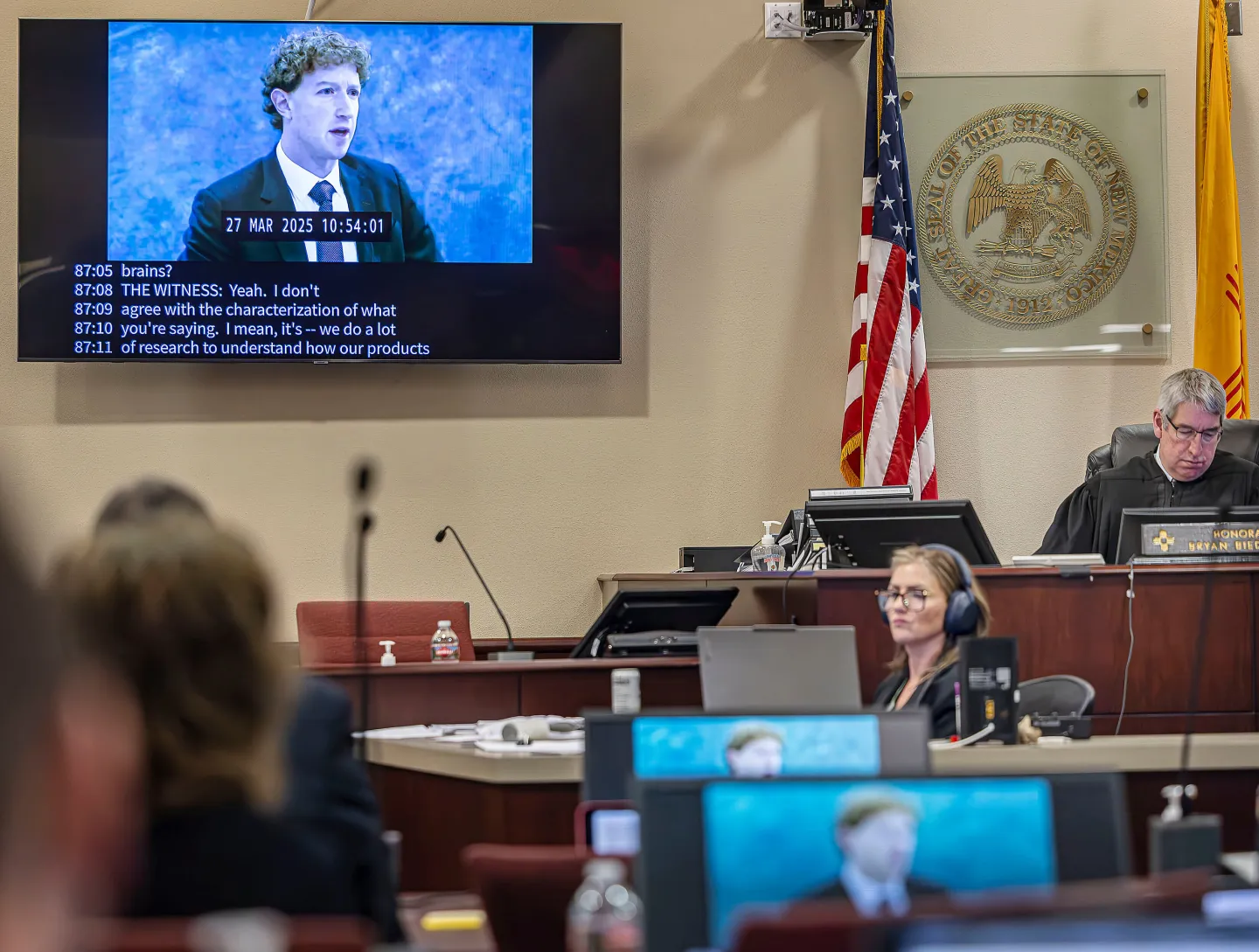
SANTA FE, N.M. (AP) — Closing arguments began Monday in a landmark trial in New Mexico where social media conglomerate Meta is accused of misleading its users about how safe its platforms are for children.
Jurors will weigh the case after six weeks of evidence, including testimonies from local teachers, psychiatric experts, state investigators, and Meta insiders.
In the state court, prosecutors allege that Meta, which owns Facebook, Instagram, and WhatsApp, has violated consumer protection laws by allegedly prioritizing profits over child safety, with a focus on harmful algorithmic recommendations.
Prosecution attorney Linda Singer outlined in her closing remarks that young users are spending excessive time on Meta’s products without adequate disclosure of risks. The prosecution highlights evidence that Meta's algorithms often promote sensational and harmful content to teenagers while failing to impose strict user age limits.
“The safety issues that you’ve heard about in this case weren’t mistakes. They were a product of a corporate philosophy that chose growth and engagement over children’s safety,” Singer told the jury. She argued that young people across the country have suffered the consequences.
As the trial progresses, Singer has requested a civil penalty exceeding $2 billion from Meta for its alleged failure to act transparently to protect minors. This calculation is based on a potential penalty of $5,000 per violation.
Meta's defense team disagrees with these claims, asserting the company takes necessary precautions to protect teenagers and that while some harmful content may slip through, it actively works to mitigate risks associated with its platforms.
In a pivotal move, New Mexico Attorney General Raúl Torrez filed this case in 2023, accusing Meta of creating a breeding ground for child exploitation and failing to acknowledge the harmful impacts of its platforms. He argued that evidence from undercover state investigators, posing as children, demonstrated Meta’s inadequacies in addressing online solicitations.
The trial unfolds amid ongoing debates regarding tech companies' responsibilities, particularly concerning how content is influenced and distributed through complex algorithms. The outcome could significantly affect ongoing and future litigations against social media giants across the U.S.