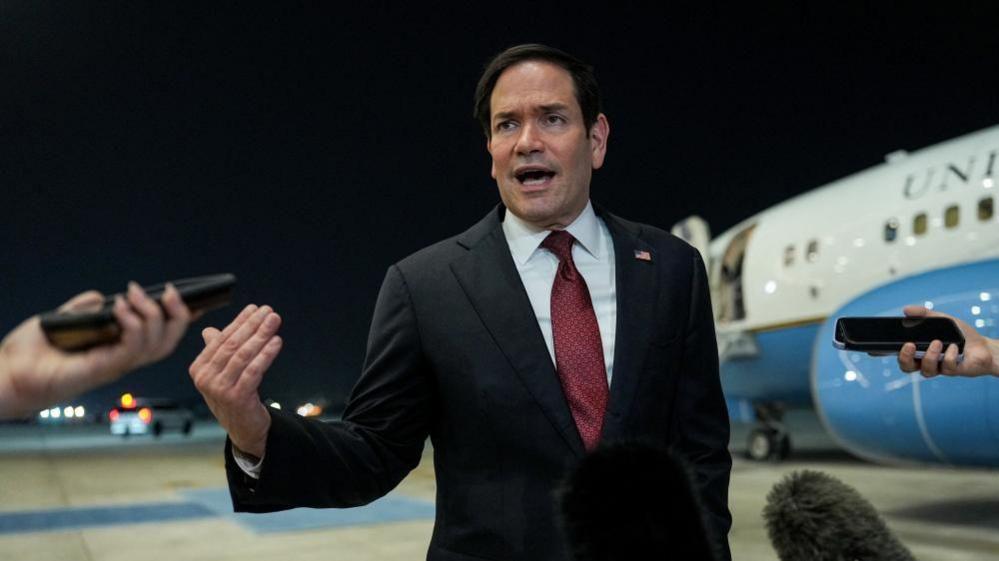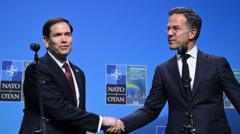
US Secretary of State Marco Rubio sought to reassure NATO allies on Thursday following a series of confusing announcements about US troop deployments in Europe, as the alliance grappled with shifting priorities under the Trump administration. Speaking at a press conference in Sweden after the NATO foreign ministers' meeting, Rubio acknowledged the turmoil but emphasized that troop adjustments were being made 'in coordination with our allies' while managing global security demands.
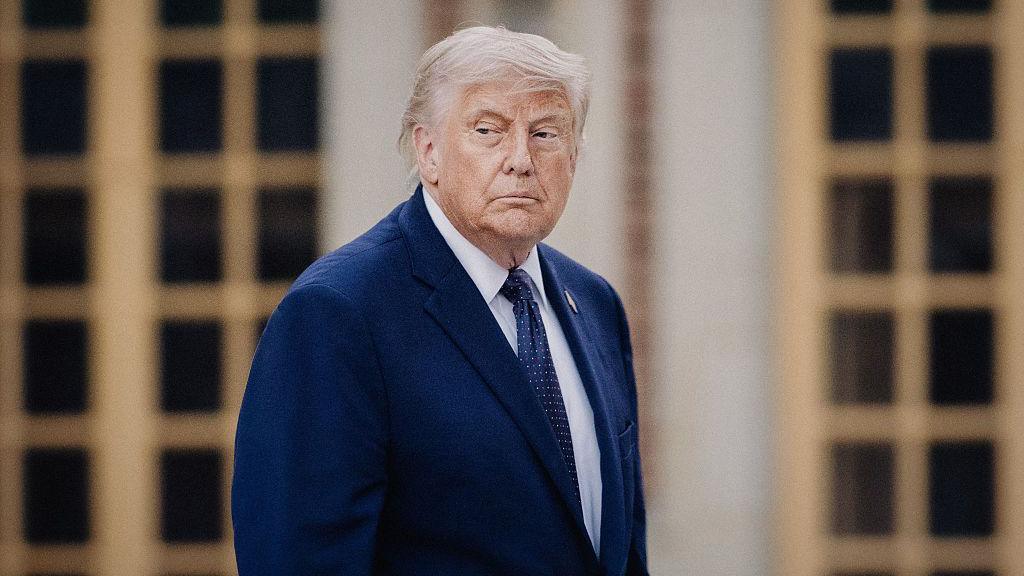
The confusion stemmed from President Trump's contradictory statements: he initially announced a cancellation of 4,000 troops bound for Poland, then days later declared an additional deployment of 5,000 to the country. This came just after withdrawing 5,000 troops from Germany amid tensions with Chancellor Friedrich Merz over the Iran conflict. 'It is confusing indeed, and not always easy to navigate,' admitted Swedish Foreign Minister Maria Malmer Stenergard, hosting the ministers' meeting in Helsingborg.
Rubio clarified the US was 'constantly reevaluating' troop presence based on evolving global commitments, particularly amid the Middle East crisis involving Israel and Iran. 'I'm not saying they're going to be thrilled about it, but they certainly are aware of it,' he stated, noting the US would maintain its European footprint while addressing regional conflicts. The comments followed Trump's Truth Social post linking the Polish deployment to his relationship with President Karol Nawrocki—a key supporter during Poland's presidential election.
The troop shifts highlight the Trump administration's broader 'America First' approach, which has intensified pressure on NATO. With US forces at 36,000 in Germany (the largest European presence), 12,000 in Italy, and 10,000 in the UK and Poland, reductions threaten to undermine deterrence against Russia. NATO Secretary General Mark Rutte warned Europe is moving toward 'less reliance on the US,' a stance that has caused alarm among allies who fear Russia's aggression in Ukraine.
Rubio reiterated the alliance's mutual value: 'I understand NATO is valuable to Europe, and it should be. It also has to be valuable to the United States.' Yet the conflicting announcements reveal fractures in US commitment, as Trump's criticism of European defense spending—coupled with refusal to support US military actions against Iran—deepens skepticism about American reliability. For NATO, the challenge is balancing security concerns with an increasingly fragmented transatlantic partnership.
As Sweden hosted the critical meeting, the US's evolving military strategy left allies questioning whether troop adjustments signal long-term withdrawal or temporary recalibration. With Russia's invasion of Ukraine still ongoing, the alliance faces mounting pressure to prove its cohesion—and the US's willingness to lead it.}
The confusion stemmed from President Trump's contradictory statements: he initially announced a cancellation of 4,000 troops bound for Poland, then days later declared an additional deployment of 5,000 to the country. This came just after withdrawing 5,000 troops from Germany amid tensions with Chancellor Friedrich Merz over the Iran conflict. 'It is confusing indeed, and not always easy to navigate,' admitted Swedish Foreign Minister Maria Malmer Stenergard, hosting the ministers' meeting in Helsingborg.
Rubio clarified the US was 'constantly reevaluating' troop presence based on evolving global commitments, particularly amid the Middle East crisis involving Israel and Iran. 'I'm not saying they're going to be thrilled about it, but they certainly are aware of it,' he stated, noting the US would maintain its European footprint while addressing regional conflicts. The comments followed Trump's Truth Social post linking the Polish deployment to his relationship with President Karol Nawrocki—a key supporter during Poland's presidential election.
The troop shifts highlight the Trump administration's broader 'America First' approach, which has intensified pressure on NATO. With US forces at 36,000 in Germany (the largest European presence), 12,000 in Italy, and 10,000 in the UK and Poland, reductions threaten to undermine deterrence against Russia. NATO Secretary General Mark Rutte warned Europe is moving toward 'less reliance on the US,' a stance that has caused alarm among allies who fear Russia's aggression in Ukraine.
Rubio reiterated the alliance's mutual value: 'I understand NATO is valuable to Europe, and it should be. It also has to be valuable to the United States.' Yet the conflicting announcements reveal fractures in US commitment, as Trump's criticism of European defense spending—coupled with refusal to support US military actions against Iran—deepens skepticism about American reliability. For NATO, the challenge is balancing security concerns with an increasingly fragmented transatlantic partnership.
As Sweden hosted the critical meeting, the US's evolving military strategy left allies questioning whether troop adjustments signal long-term withdrawal or temporary recalibration. With Russia's invasion of Ukraine still ongoing, the alliance faces mounting pressure to prove its cohesion—and the US's willingness to lead it.}