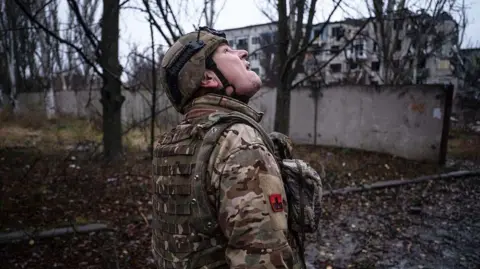
After 225 days in a front-line foxhole, Ukrainian infantryman ‘Kenya’ could barely walk due to muscle weakness. Attempts to rotate him out were thwarted by the constant threat of drones, rendering the area near Kostyantynivka one of the most precarious in the ongoing conflict.
Kenya's return to his brigade involved a treacherous two-day journey, carefully avoiding mines and dodging drone surveillance. The situation is dire, with Russian forces tightening their grip around this strategic city, vital for Ukraine's defense in the Donbas region.
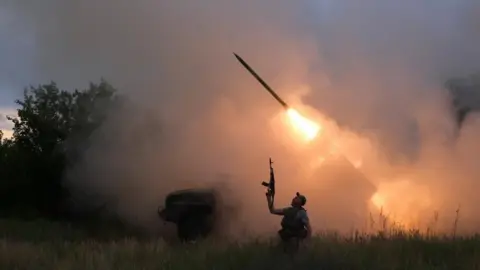
Ukraine’s 93rd brigade is tasked with safeguarding Kostyantynivka, as its fall could open up routes for further Russian advances in the Donbas, intensifying the conflict. The increasing effectiveness of drone warfare has fundamentally changed operational tactics, with small squads often relying on speed to evade detection rather than traditional armored assaults.
Soldiers face new challenges; drones currently dominate combat landscapes, necessitating advanced tactics to maintain territory. Kenya describes the tribulations of daily survival amidst intense drone activity, highlighting the psychological toll of constant vigilance and fear of detection.
As the frontline dynamic evolves, soldiers like Kenya illustrate the indispensable human element in modern warfare. Their experiences underscore the reality that despite technological advancements, boots on the ground remain critical for territory defense.
Resource scarcity compounds their hardships, with vital supplies delivered sporadically via drones, while soldiers recount desperate conditions, including extreme temperatures, inadequate foods, and water shortages. Such privations serve as a grim backdrop to the broader military landscape, where Ukrainian forces brace for potential Russian offensives.
Despite the use of advanced military hardware, the ancient adage remains true: without the grit of foot soldiers entrenched in foxholes, the battle for territory continues to be fraught with peril and uncertainty.